← All work
Cyberport e-commerce platform
Case Study 04 · E-Commerce · Cyberport GmbH

Cyberport — E-Commerce UX & Renting Launch

Improved conversion-critical journeys across the product detail and browse experience, built the first scalable UI library, and designed the end-to-end launch of Miet Mich — a new tech renting business model for Germany's largest electronics retailer.

E-Commerce UXConversionPDP DesignDesign SystemWorkshopsBrowse UXNew Business Model

Context

Cyberport is one of Germany's largest online electronics retailers, with a catalogue of tens of thousands of products across consumer electronics, computing, and peripherals. The product detail page (PDP) is the highest-traffic, highest-stakes page in the funnel — where purchase decisions get made or abandoned.

I contributed as Interaction Designer on the PDP and browse experience, and on a new business model: a tech renting service called "Miet Mich" (Rent Me) — allowing customers to rent electronics instead of buying them outright.

Challenge

E-commerce PDPs must be fast, scannable, and conversion-friendly across an enormous product catalogue — while multiple teams ship changes in parallel. Without shared patterns, visual consistency and UX quality drift across product categories. At the same time, adding a renting model to a buying platform requires careful UX thinking: different decision criteria, different risk tolerance, different information needs.

What I did

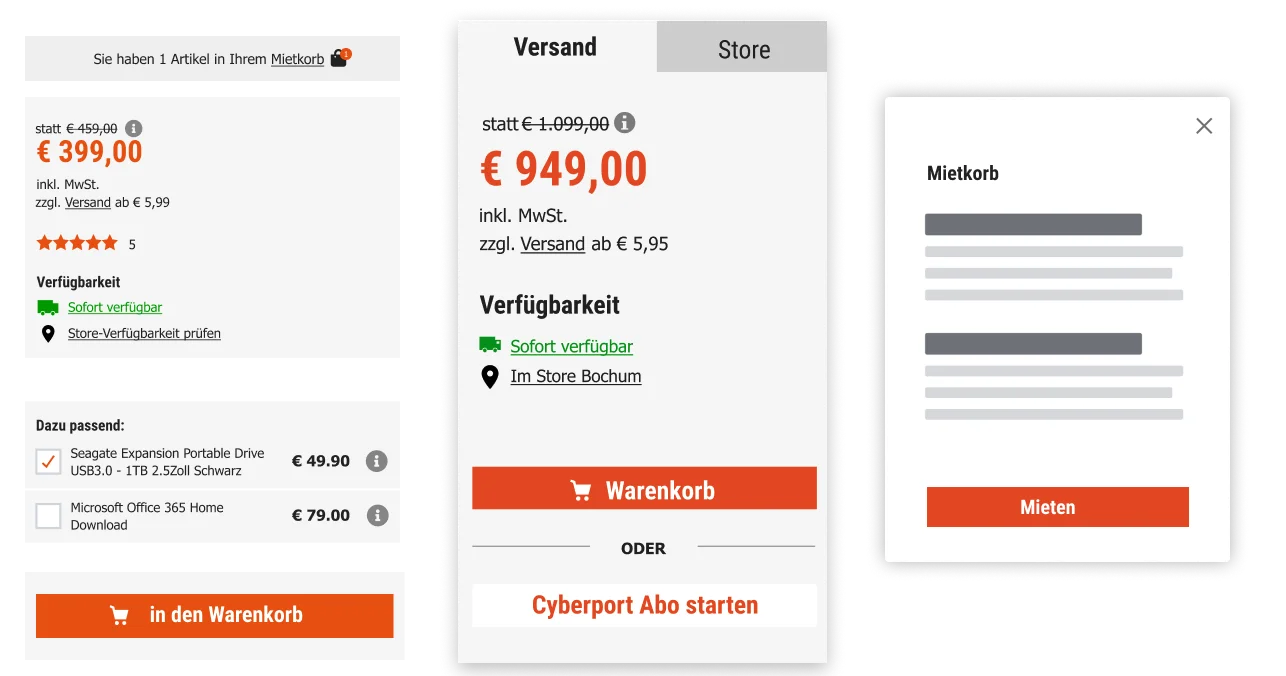
  • Restructured PDP information hierarchy — surfaced key specs, pricing, and primary CTAs earlier and more prominently
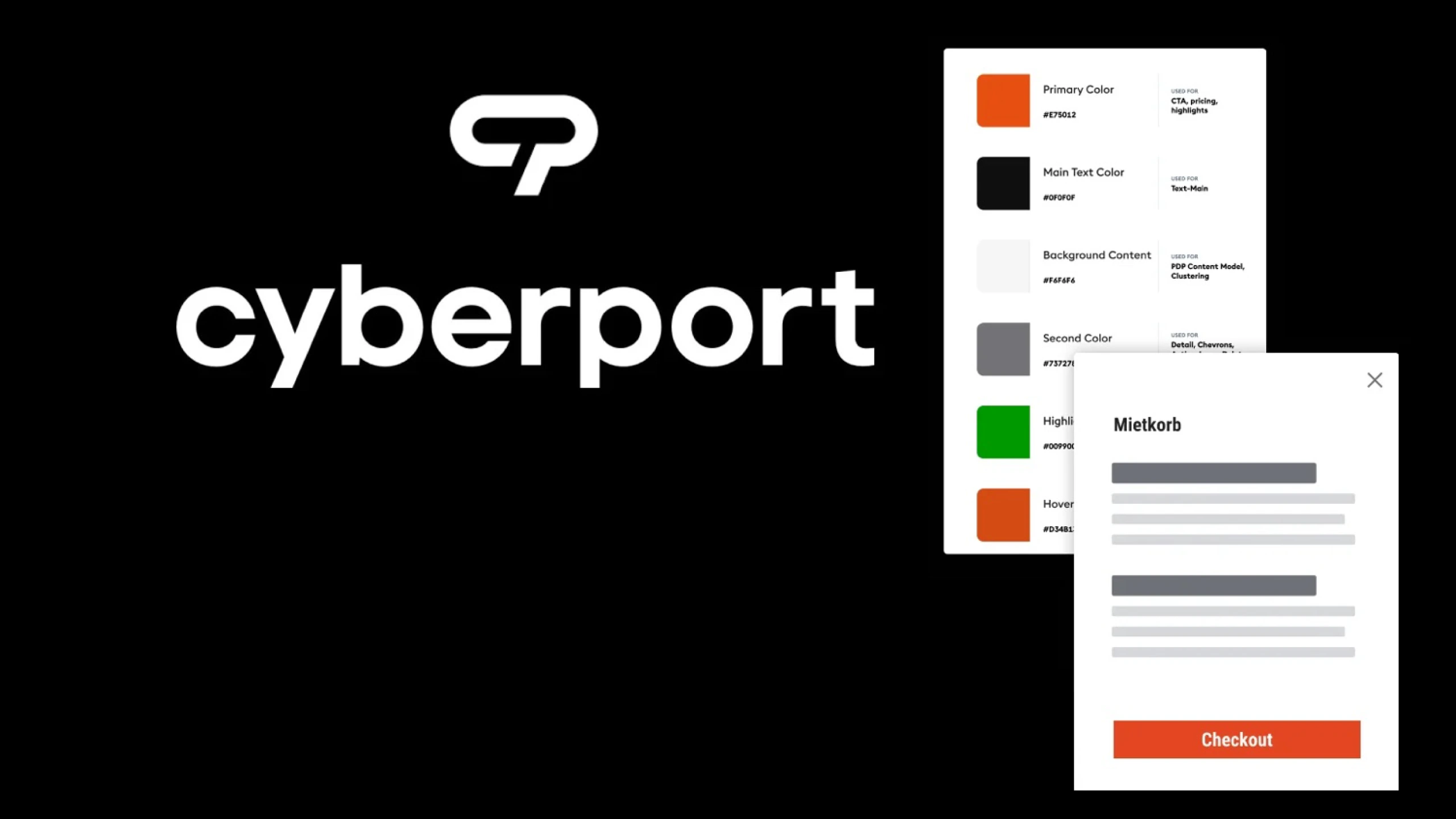
  • Built and maintained a shared UI library to improve consistency when multiple teams shipped in parallel
  • Facilitated onsite stakeholder workshops to align UX goals with brand and commercial priorities
  • Used customer data and feedback loops to prioritise changes and measure impact on browse-to-cart metrics
  • Designed the end-to-end renting journey (Miet Mich) — from discovery to checkout and return logistics

Process

1

Audit

Heuristic audit of existing PDPs across categories. Identified hierarchy, trust, and scannability gaps.

2

Workshop

Onsite stakeholder workshops to align UX, brand, and commercial goals across teams.

3

Redesign

New information hierarchy for PDPs. Parallel design of Miet Mich renting journey flows.

4

Library

Shared UI component library to ensure new patterns scaled across the catalogue and teams.

5

Roll out

Incremental rollout with data tracking. Iterate on conversion metrics and user feedback.
Selected visuals

Cyberport e-commerce platform
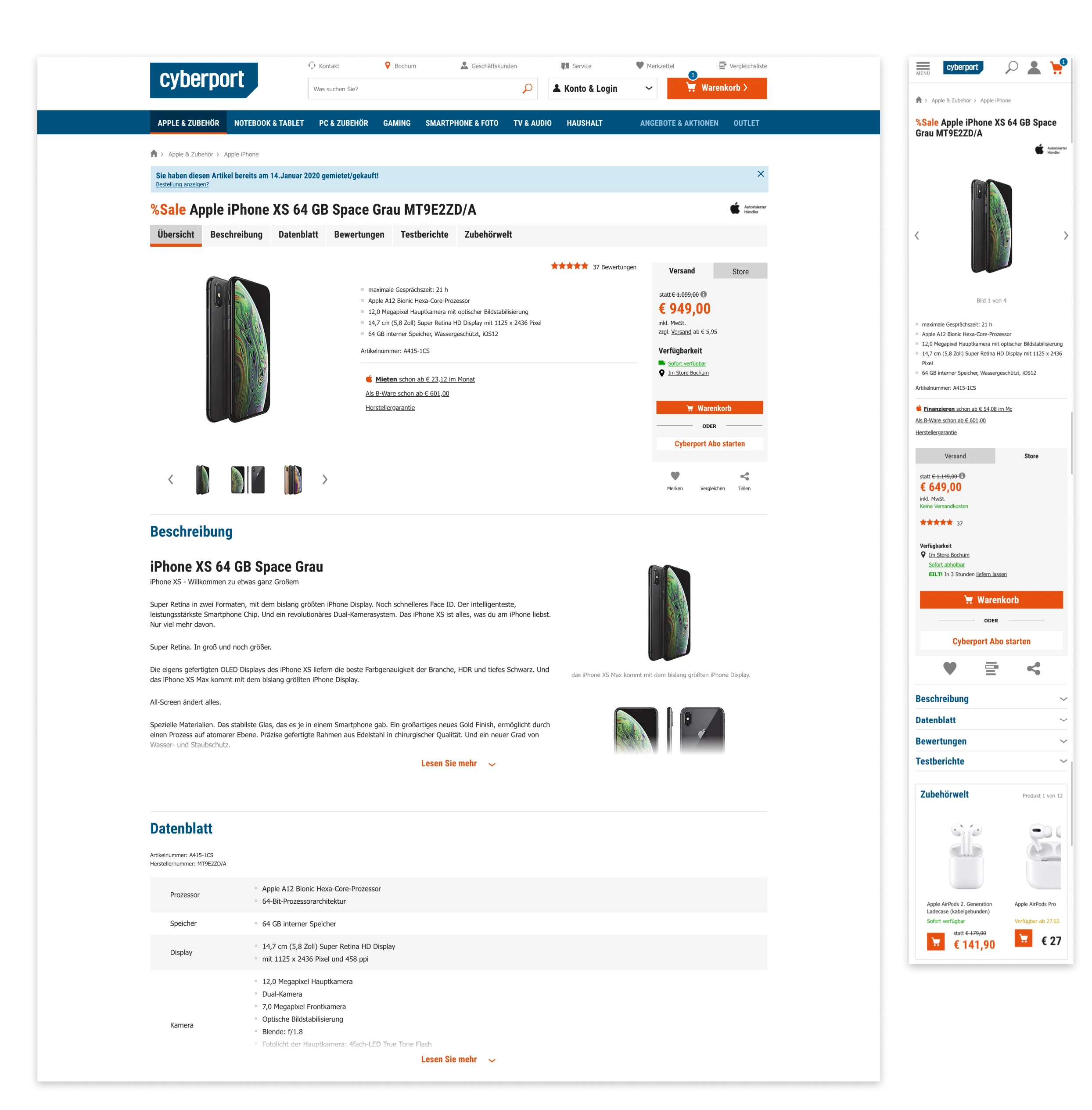
Cyberport platform overview — browse and product discovery
Product detail page redesign
PDP redesign — restructured information hierarchy with key specs and CTAs surfaced earlier
Miet Mich renting journey
Miet Mich (Rent Me) — new renting journey designed end-to-end for a new business model
Some detailed flows are confidential. Happy to discuss conversion metrics and the renting journey in a call.

Outcome

  • Cleaner PDPs and smoother browse-to-cart paths — measurable conversion improvements across key categories
  • A scalable UI library foundation that reduced friction when multiple teams shipped changes in parallel
  • A complete renting journey (Miet Mich) — balancing renter needs, return logistics, and business constraints

What I learned

  • PDP design is a hierarchy problem: show what matters now, hide what matters later — resist the urge to show everything
  • A design library is a delivery tool, not a design artefact — its value is only real when teams actually use it in parallel
  • New business models (renting vs. buying) require new UX models — the same patterns don't always transfer
  • Incremental rollout with measurement beats big-bang redesigns in high-traffic commerce environments

Want to see more?

Available for freelance and contract work. Berlin or remote across the EU.