Case Study 01 · Fintech · Design Leadership · IC · DKB
DKB — Co-Branding & White-Label Department
A multi-year stream of product design work inside DKB's white-label credit card department — spanning team building, design leadership, design system foundations, and hands-on UX/UI delivery across iOS, Android, and Web. Multiple projects. One department. One design lead who also shipped.
Design LeadPrincipal ICTeam of 3Design SystemFintech · Regulated
DKB's Co-Branding department provides white-label credit card solutions for private and business customers in partnership with major consumer brands. Each partner gets a fully branded product — their own card design, app appearance, and feature set — built on a shared, compliant platform. The department runs multiple concurrent product streams: new partner launches, ongoing improvements to existing products, and platform-level infrastructure like the design system.
6+Partner brands
3Designers led
3Platforms
6+Partner brands
My role: Design Lead and IC
I was the only senior designer in the department when I joined. My mandate was both strategic and hands-on: build the team, establish quality and delivery standards, and continue shipping as an individual contributor on the most complex projects in parallel.
This is not an unusual combination — it's the right one for early-stage or lean design organisations. Being close enough to the work to set a real quality bar, while also shaping how the team operates and grows. I was not a manager removed from delivery; I was on the work every day, while simultaneously running the team.
The job was to build a team that could scale, and keep shipping at the same time. Both mattered equally.
Building the team
I hired and onboarded two additional designers, and built the team's working culture and rituals from the ground up — inside a regulated, fast-moving fintech environment.
🎯
Clear goals
Team goals and individual development goals aligned from day one — design quality and professional growth treated as equally important.
🗣️
Open environment
Actively created space for idea sharing, honest feedback, and disagreement — no top-down design mandates.
🔁
Feedback loops
Regular 1:1s, design critiques, and cross-platform reviews as rituals, not one-offs. Feedback went both ways.
📚
Growth & ownership
Protected time for learning. One designer took full ownership of the design library — and grew significantly through that responsibility.
🧩
Cross-platform critique
Team design reviews across iOS, Android, and Web — catching inconsistencies early and building a shared quality standard.
🛠️
Workload visibility
Notion for team-wide task visibility and prioritisation. Connected to Jira and the product roadmap so design work aligned with delivery.
Stakeholder alignment & cross-functional work
Ran workshops with clients and internal stakeholders to align scope, priorities, and constraints before design started
Represented design in product strategy meetings — contributed UX input to roadmap decisions, not just delivery execution
Collaborated with product managers, engineers, legal, and compliance across multiple product streams simultaneously
Made compliance and regulatory constraints visible early in the design process to prevent expensive late-stage rework
How I structured the work
1
Align
Frame constraints (compliance, partner contracts, platform differences). Agree on success criteria before design starts.
2
Map
Map partner variations and critical user journeys — onboarding, card management, self-service, and revolving credit.
3
Design
Tokens, patterns, and flow prototypes that scale across brands and all three platforms without duplication.
4
Validate
Cross-platform reviews, user research where possible, and usability checks to catch edge cases before handoff.
5
Ship
Govern handoff quality, document decisions, and iterate with product and engineering post-release.
What I learned
In regulated products, making constraints visible early is the highest-leverage design activity — it prevents expensive late changes downstream
Team growth requires genuine ownership: giving a designer full responsibility for the library produced better results than top-down control
Being IC and Lead simultaneously only works if the IC work is real — not a side job, but the primary signal for what quality looks like
The challenge: one platform, six brands, three platforms
Every partner gets their own branding — colours, logo, card design, and sometimes custom features. But the underlying platform must be consistent, compliant, and maintainable. Without a design system, that means duplication: six brands × three platforms = 18 parallel design maintenance chains, all drifting apart over time. Compliance changes cascade manually. Every partner update requires rebuilding rather than re-theming.
The design system was the infrastructure that made scalable, consistent partner delivery possible.
Token-based architecture
We built a three-layer token system as the foundation. Tokens define design properties — colour, typography, spacing, radius, shadow — as named variables, customised per partner at the brand layer, not the component layer.
Global tokens — base palette, spacing scale, type scale. Platform-agnostic primitives.
Semantic tokens — map global values to roles: primary, surface, on-surface, error, interactive.
Partner tokens — override semantic tokens per brand. One structured swap, not a manual redesign.
A new partner rollout became a theming exercise, not a redesign exercise. This was the central efficiency gain.
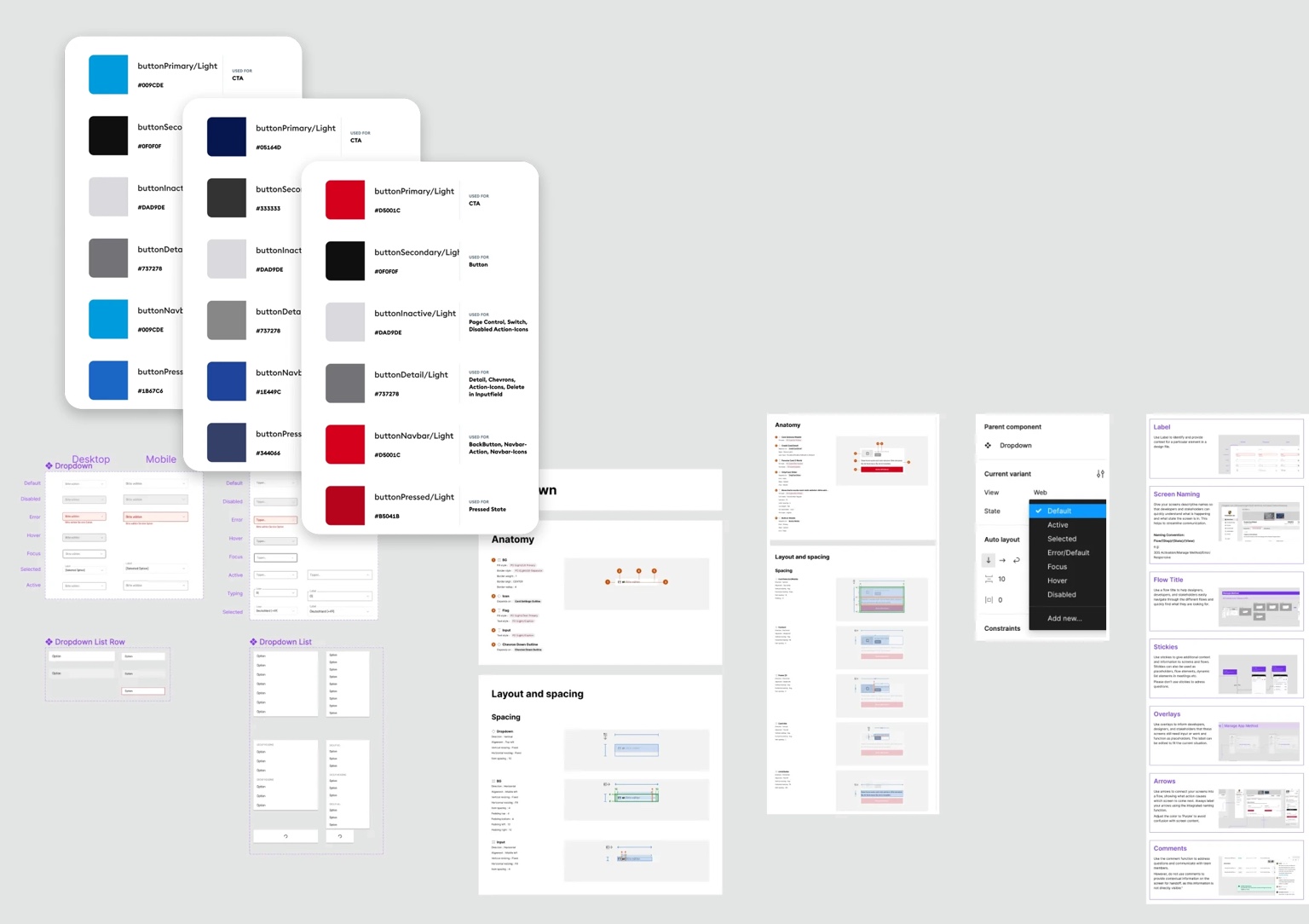
Token library — colour, type, and spacing variables structured for multi-brand theming
Component library — three platforms
Managing a design library across Web, iOS, and Android means balancing platform conventions with cross-product consistency. Each platform has its own interaction patterns and native metaphors — ignoring these produces designs that feel wrong and are hard to build. Ignoring cross-platform consistency produces a fragmented user experience.
Core components defined once, with platform-specific variants — not three separate systems
One designer took full ownership of the library — their most significant growth in the team
Versioning and cross-platform review rituals kept all three systems in sync over time
Documentation standards reduced back-and-forth with engineering on implementation decisions
Fewer consistency issues in production — cross-platform reviews caught drift before release
Engineers had reliable, well-documented specs — reduced ambiguity and rework on implementation
New team members onboarded to the design language faster through the shared library
Detailed component specs are confidential. Happy to discuss system structure and decisions in a call.
Multiple products under one roof
This is not a single app with a few variants. The Co-Branding department runs several fully distinct product streams simultaneously — each with its own partner relationship, feature roadmap, compliance requirements, and release cadence. They share a platform and design system underneath, but each is a real product with real users and real business stakes.
Partner
Miles & More
Lufthansa Group frequent flyer credit card. Mileage management, loyalty integration, and cardholder self-service across mobile and web.
Partner
Porsche Card
Premium card for Porsche customers. High-end visual identity, concierge features, and premium UX expectations throughout.
Partner
Hilton Honors
Hotel loyalty card product. Points accumulation, tier tracking, and hotel brand integration across the cardholder experience.
+ more
Additional partners
Further co-branded products across consumer and business card segments. Details confidential.
Mobile banking — branded variants

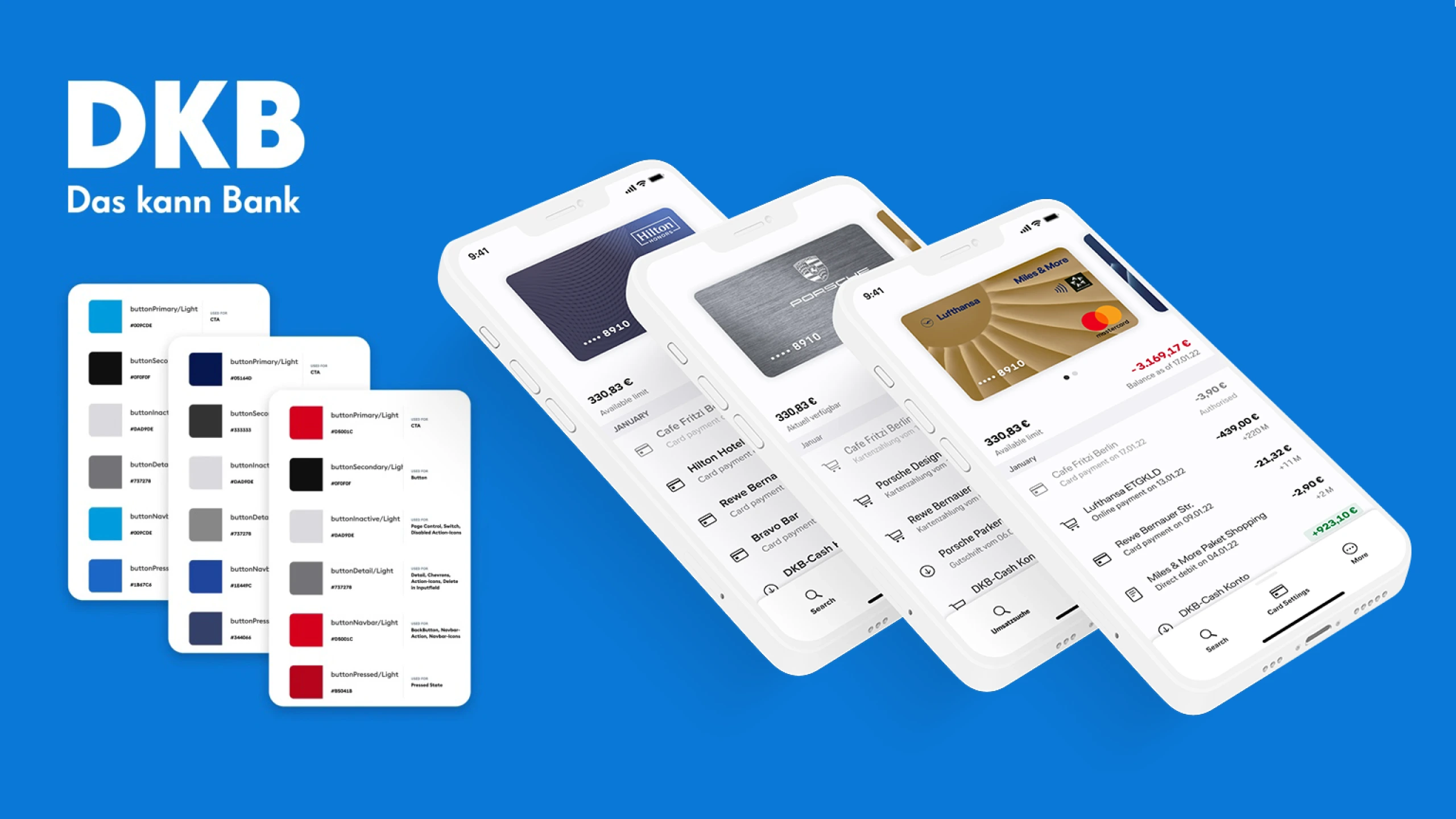
Each partner's mobile app is a fully branded experience — the same platform and component library underneath, a distinct product on the surface. My work covered both the core cardholder journeys shared across all partners and the partner-specific features and brand applications.
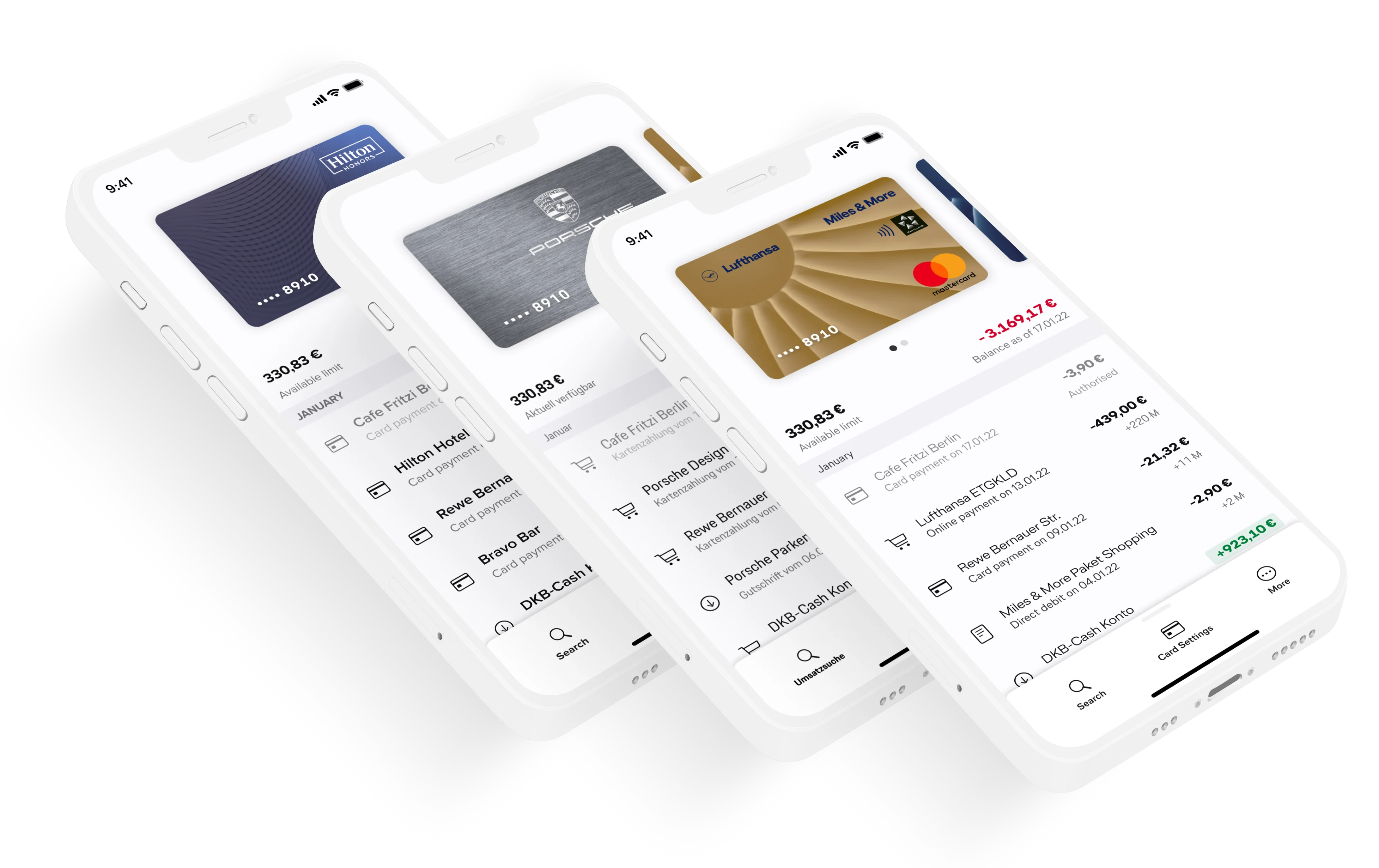
Partner brand system — one component set adapting across multiple brand identities through token-based themingMobile banking UI — the same platform presented as distinct products across different partner brands
Core cardholder journeys
Beyond the visual branding, my main design focus was on the core UX journeys every cardholder goes through — regardless of which partner they're with. These are the highest-stakes flows in the product: where users make decisions about money, credit, and account management under regulatory constraints.
Credit card application — multi-step onboarding with compliance-mandated checkpoints and clear progress
Card activation — first-use flows for physical and virtual cards across platforms
Transaction management — list, filter, category, dispute, and receipt management
Card management — PIN, block/unblock, Apple Pay / Google Pay setup, travel notifications
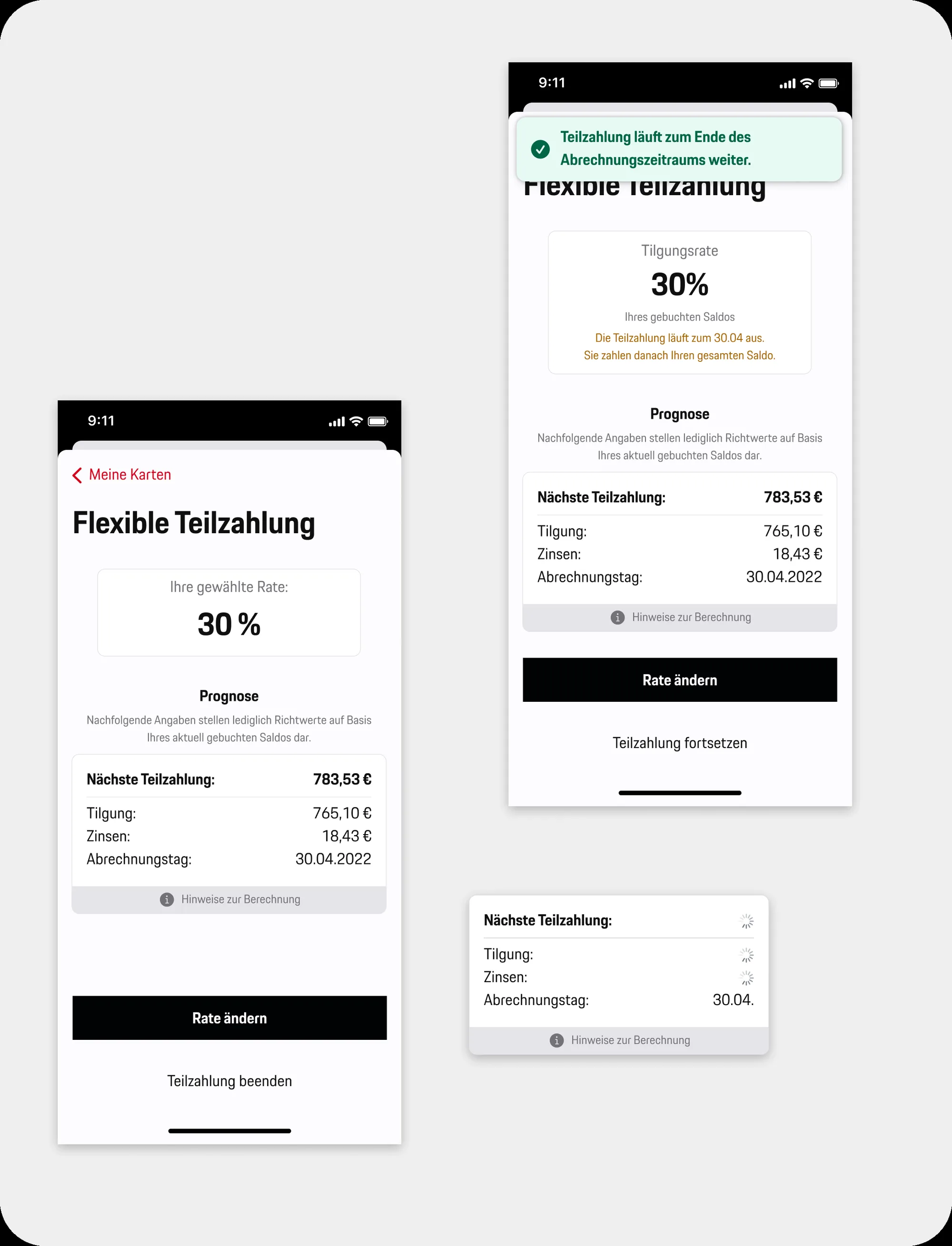
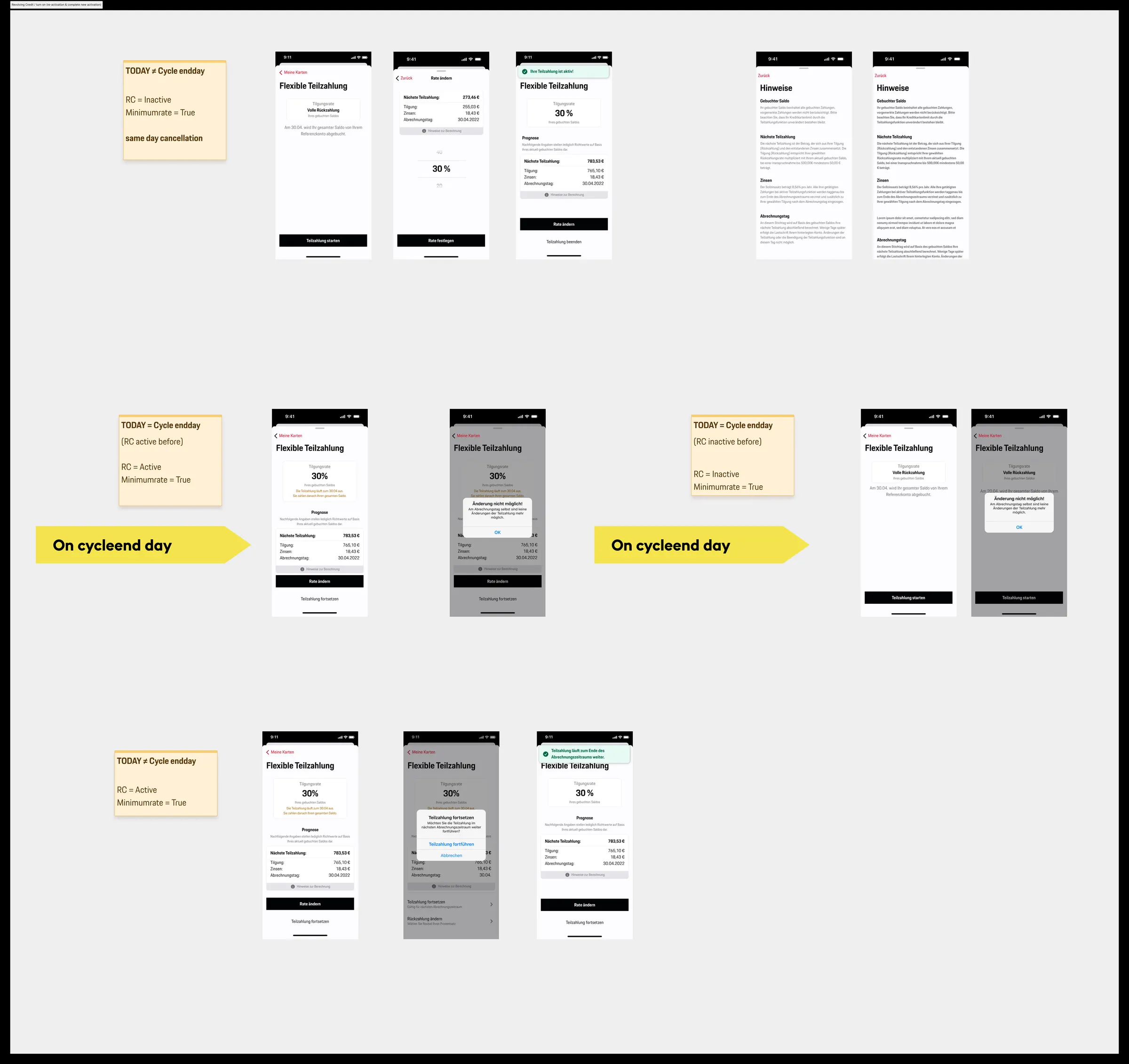
Revolving credit — instalment setup, repayment planning, and balance visibility
Detailed flow artefacts are confidential. Happy to walk through onboarding or cardholder journeys in a call.
IC work alongside leadership — intentionally
My role was not just to lead the team — I stayed hands-on as an individual contributor on the most complex design problems in the department throughout the engagement. This was deliberate: the best way to set a quality bar is to do the work, not just review it. It also kept me close enough to the real constraints — compliance edge cases, engineering limits, tight timelines — to make better strategic decisions.
Leading and shipping at the same time means the quality bar is set by example, not by instruction.
Complex workflow design
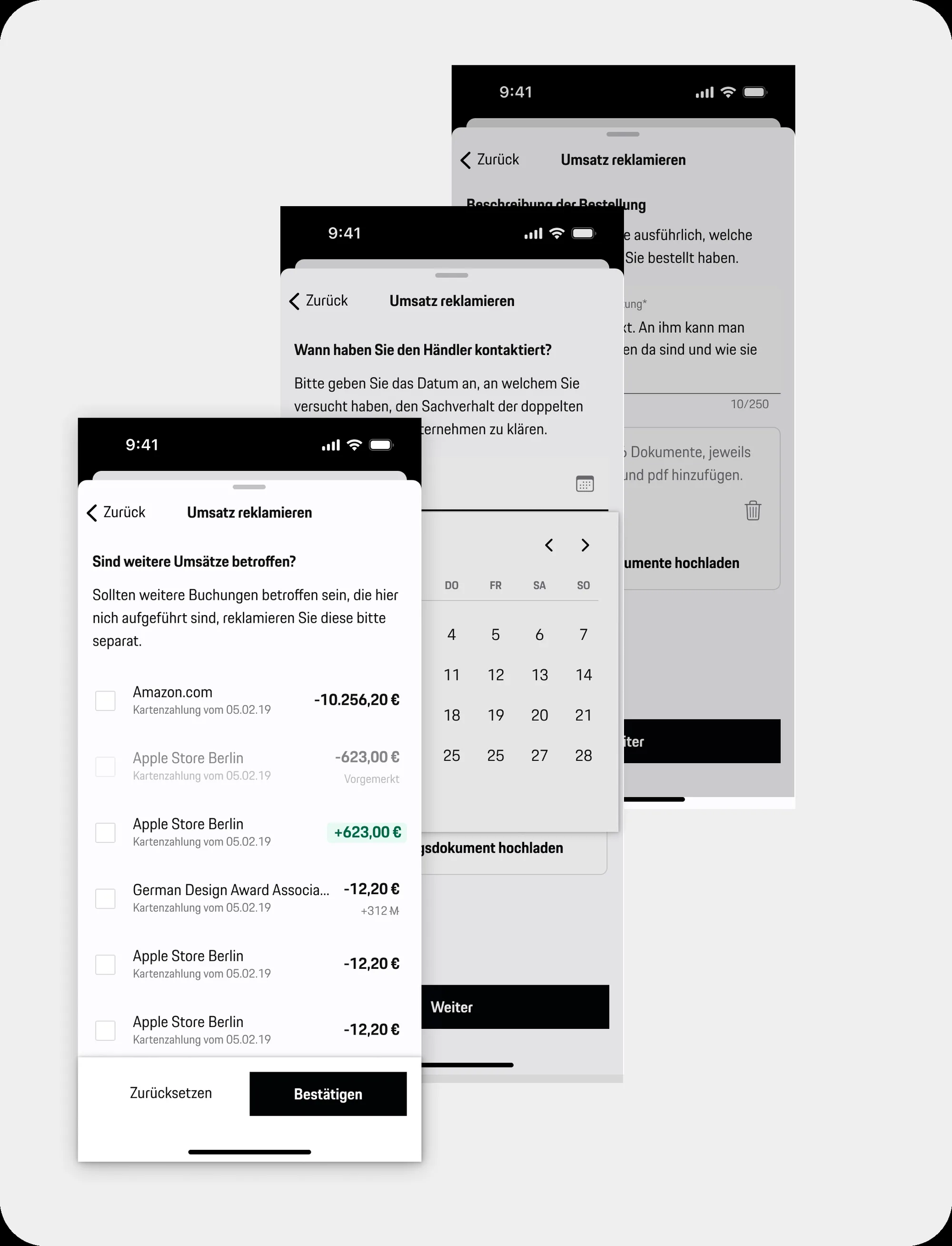
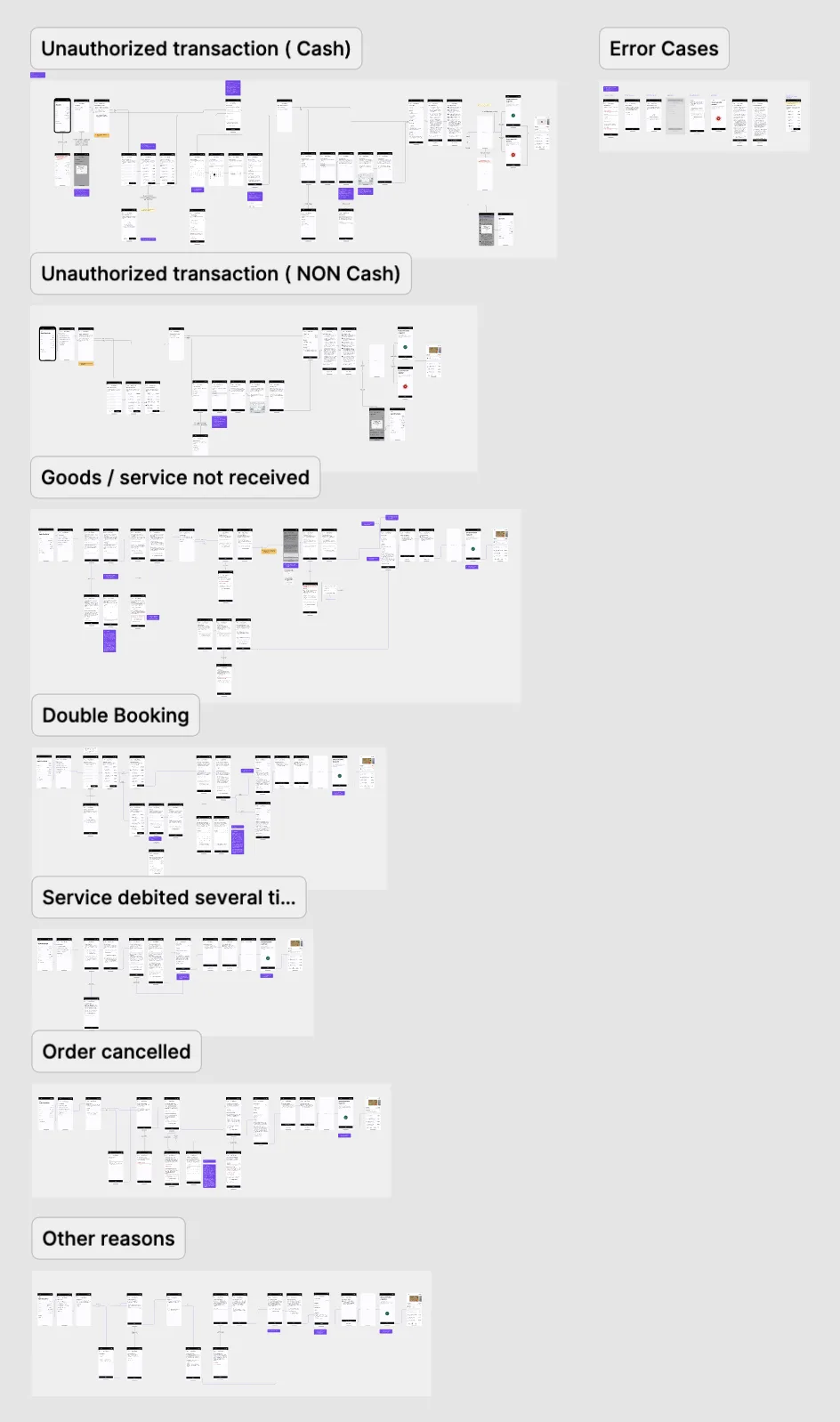
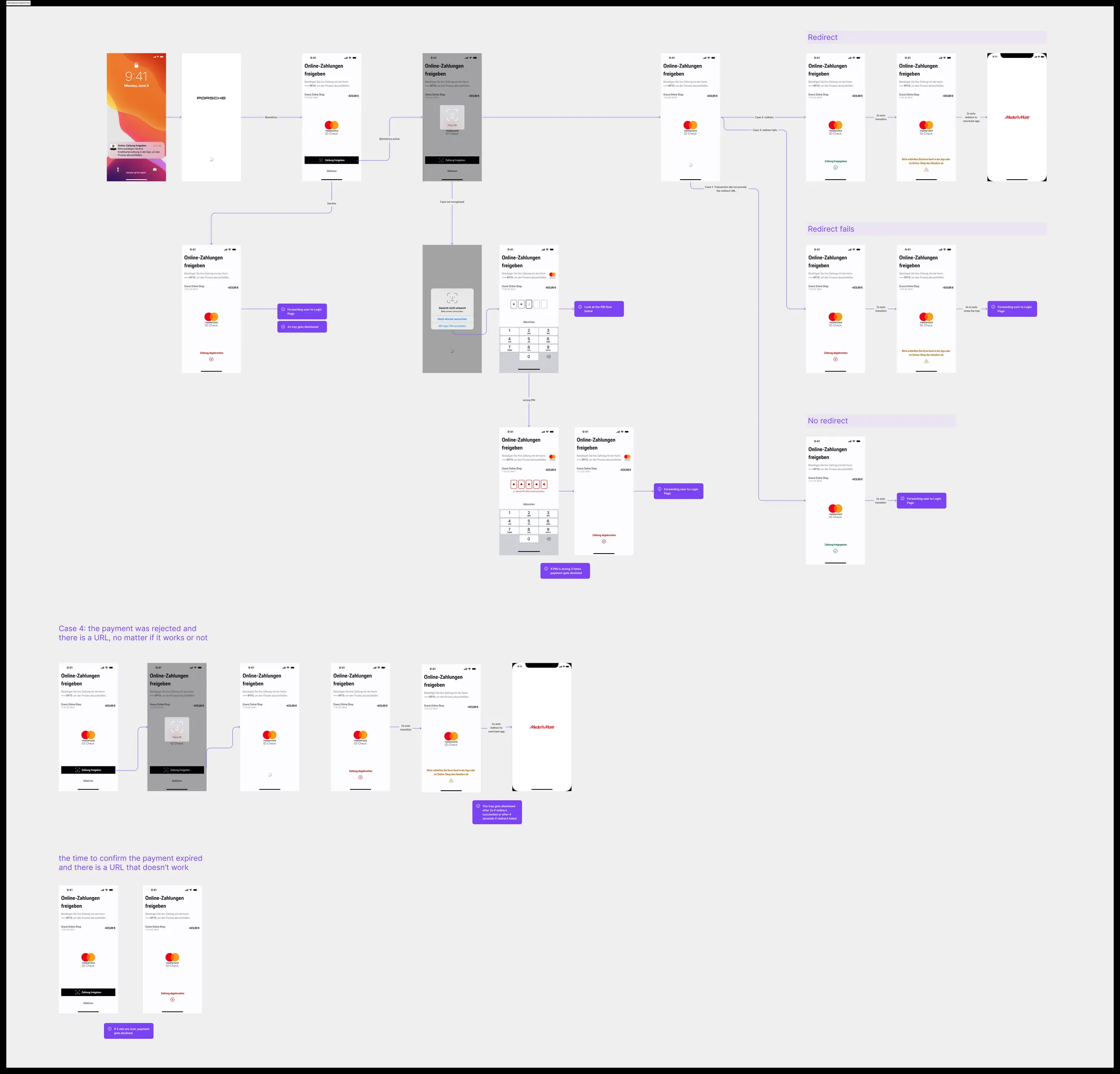
The most demanding IC work involved multi-step workflows with significant branching logic — chat-back flows for dispute resolution, complex card management states, multi-step onboarding with compliance-driven branching, and edge cases that required careful state mapping. These required tight IA, clear error and loading states, and close collaboration with engineering to stay buildable and compliant.
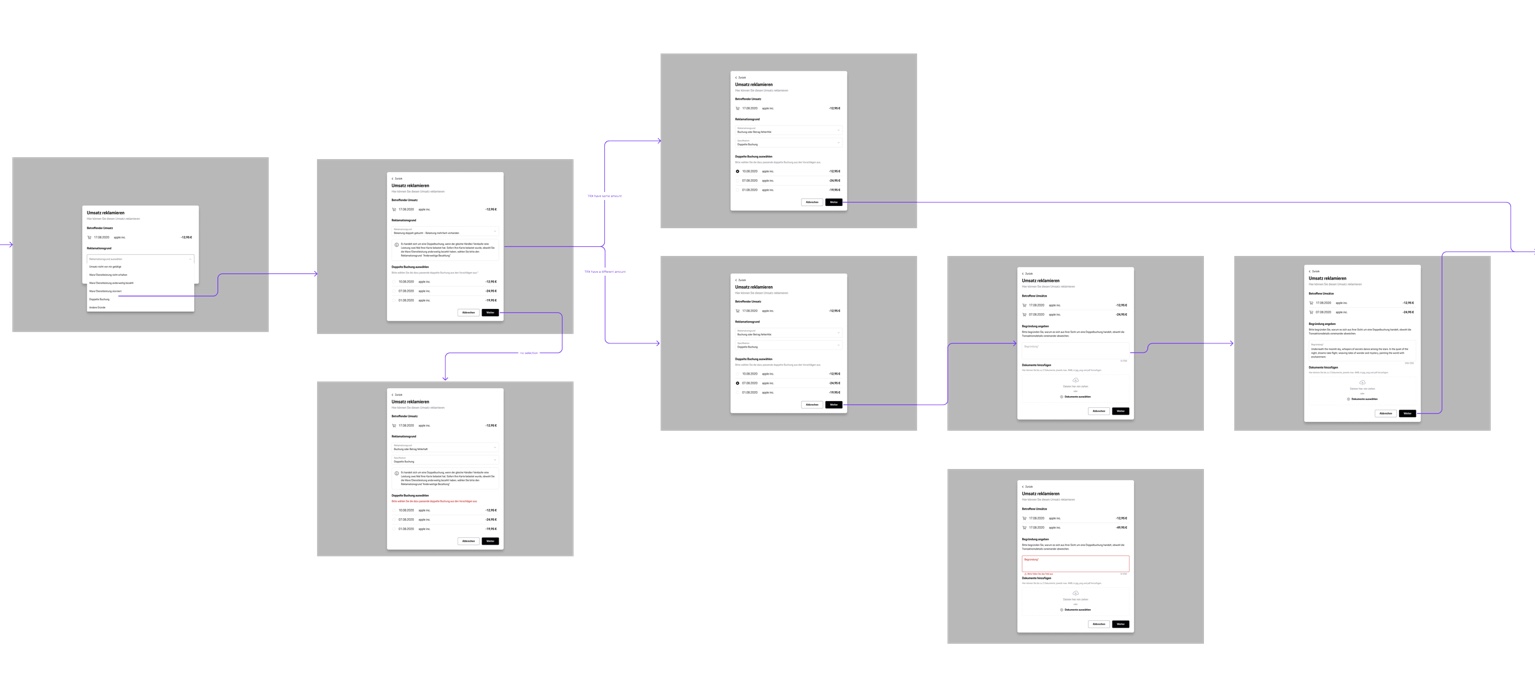
Chat-back dispute flow — multi-step branching workflow with clear state transitionsTransaction search and filter — layered filter system with progressive disclosure
Search & filter design
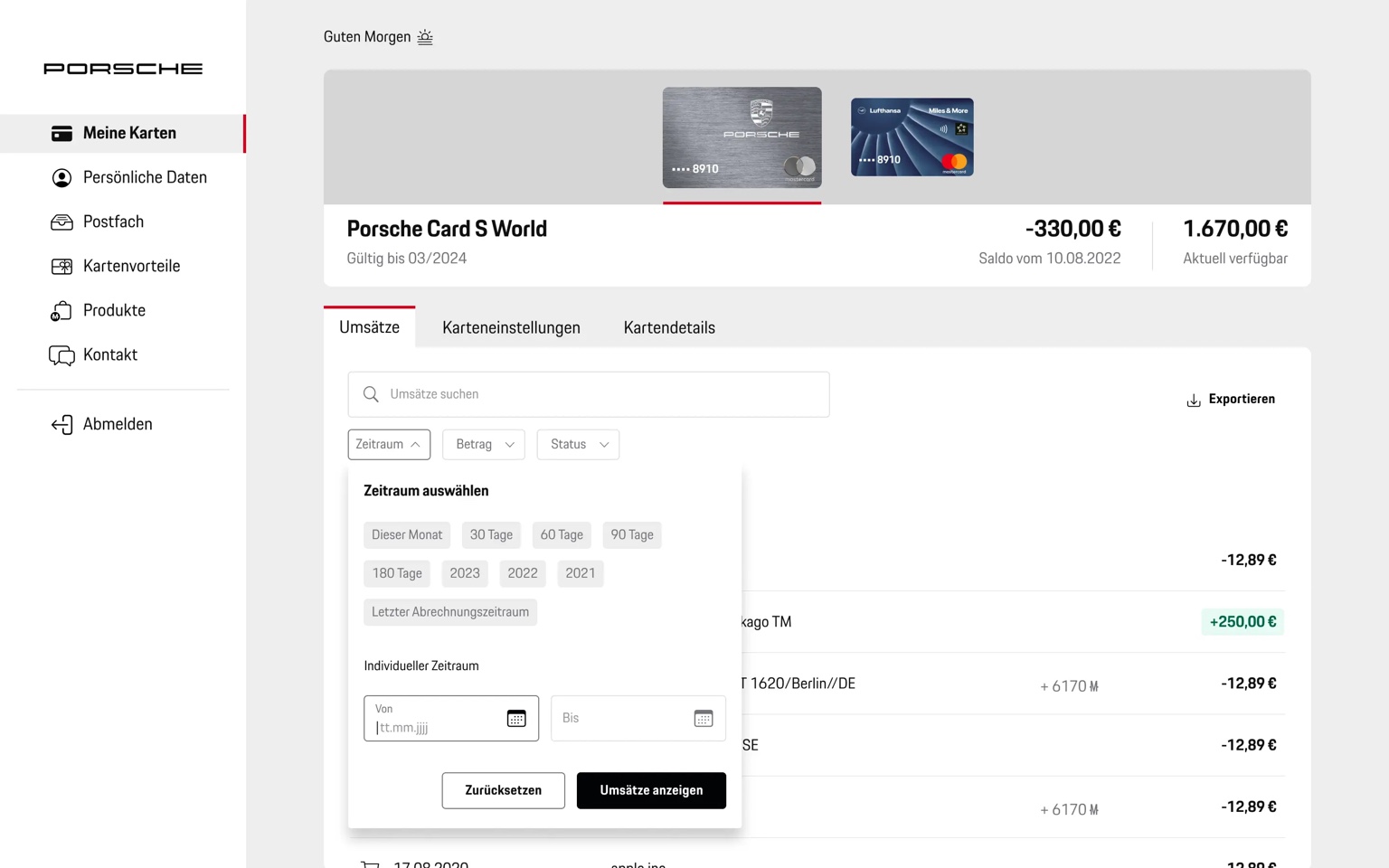
Transaction filtering in a credit card product is deceptively hard. Users need to combine date ranges, amount ranges, categories, merchant names, and card types across potentially thousands of transactions. The design challenge: make this powerful for the analyst, invisible to the casual user who just wants to find yesterday's coffee.
Layered filter system: quick chips for the most common use cases, advanced panel for power users
Progressive disclosure: complex filters surface when needed, not displayed by default
Active filter state permanently visible — with clear individual-filter removal affordance
Collaborated closely with engineering on filter persistence, URL state, and deep-link sharing
Full interaction flows are confidential. Happy to discuss the design approach in detail in a call.
How the IC and Lead roles connected
IC work gave me direct knowledge of the real design challenges — not a filtered, management-level view
This made feedback to the team more useful: I could point to specific problems and show alternative approaches, not just give abstract direction
Design system changes were validated on real IC work first — not in isolation from actual product problems
Staying close to implementation built credibility with engineers: decisions were grounded in technical reality, not just visual preference
Want to see more?
Available for freelance and contract work. Berlin or remote across the EU.