← All work
Immoly AI agent workspace
Case Study · Freelance · Agentic AI · Immoly

Immoly, An AI Agent
for Property Management

Immoly lets landlords delegate the grind of property management, tenant communication, repairs, documents, to an AI agent. The design challenge wasn't drawing screens. It was defining how delegation should feel: what the agent does on its own, where the human decides, and how trust is earned in the interface.

Lead Product Designer Agentic AI 0 → 1 Conversational UX
Agentic AI Human-in-the-loop Conversational UX Interaction Paradigm B2B SaaS Figma

The problem: management by inbox

For small landlords, property management is an unstructured stream: tenant emails, repair calls, contracts, deadlines. Nothing is a system, everything is an interruption. The promise of Immoly is simple: hand this stream to an AI agent that reads, sorts, drafts, schedules, and tracks. The hard part is that people don't hand over their properties to a black box.

The design question: what does trustworthy delegation look like?

Delegation to an AI fails in two directions. If the agent asks about everything, it's just a to-do list with extra steps. If it acts silently, users feel a loss of control and leave. The interaction paradigm I defined sits deliberately between the two:

  • Visible work, the agent's activity is a first-class feed, not a hidden background process. You can always see what it did, is doing, and plans to do.
  • Approval where it matters, money, legal commitments, and anything tenant-facing waits for a human yes. Routine sorting and drafting doesn't.
  • Graceful hand-off, every automated step can be taken over manually, mid-flow, without starting over.
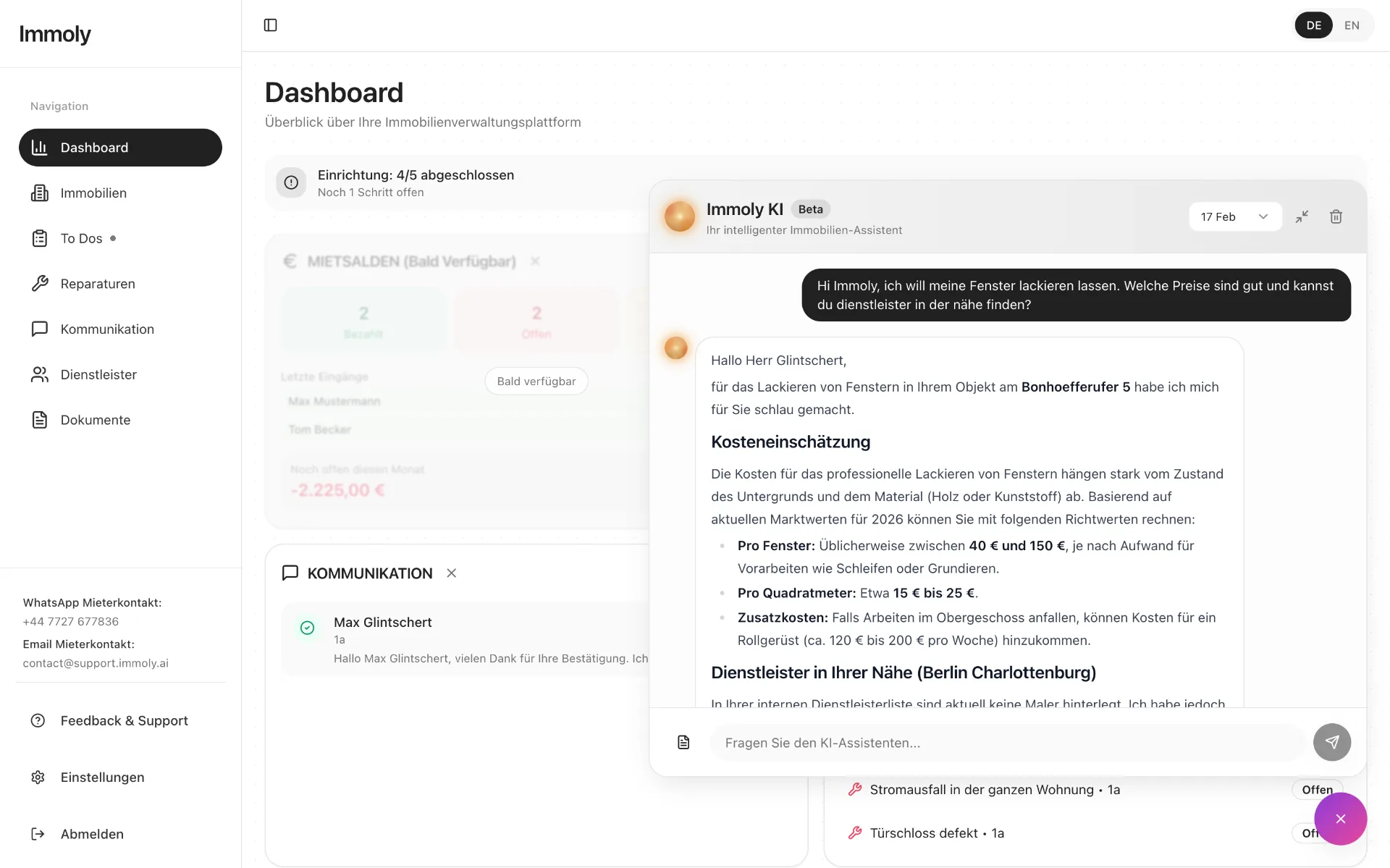
Immoly agent workspace
The agent workspace, delegation as a visible, inspectable process. The agent proposes, the human disposes.

The workspace: one place instead of an inbox

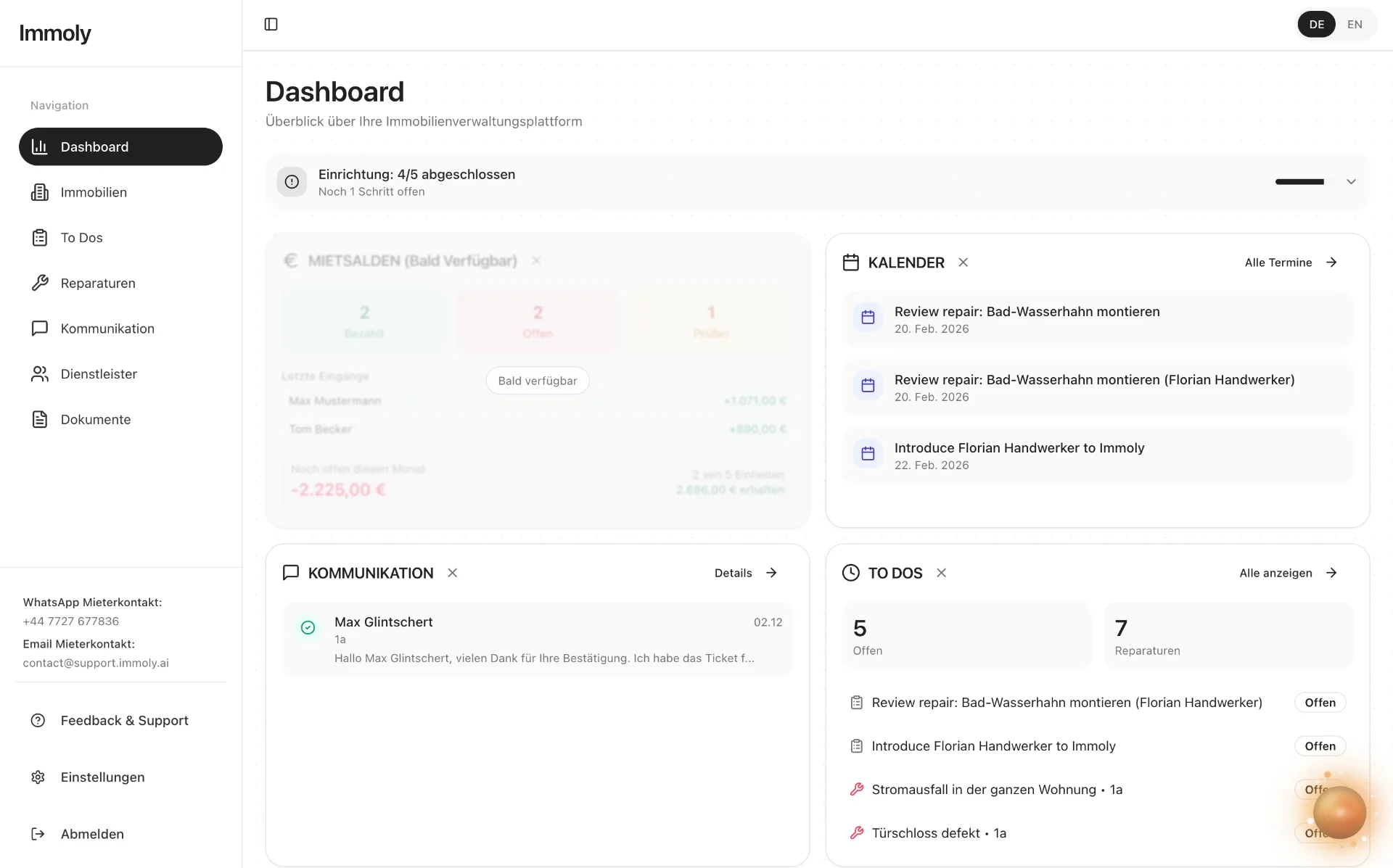
Around the agent sits a structured workspace: properties, tenants, communication, documents, repairs. The agent populates and maintains it, the human uses it to stay oriented. Status is always visible per property and per open thread, so "is everything handled?" is answered by the dashboard, not by anxiety.
Immoly dashboard
Dashboard, portfolio state at a glance: open items, agent activity, what needs a human decision.
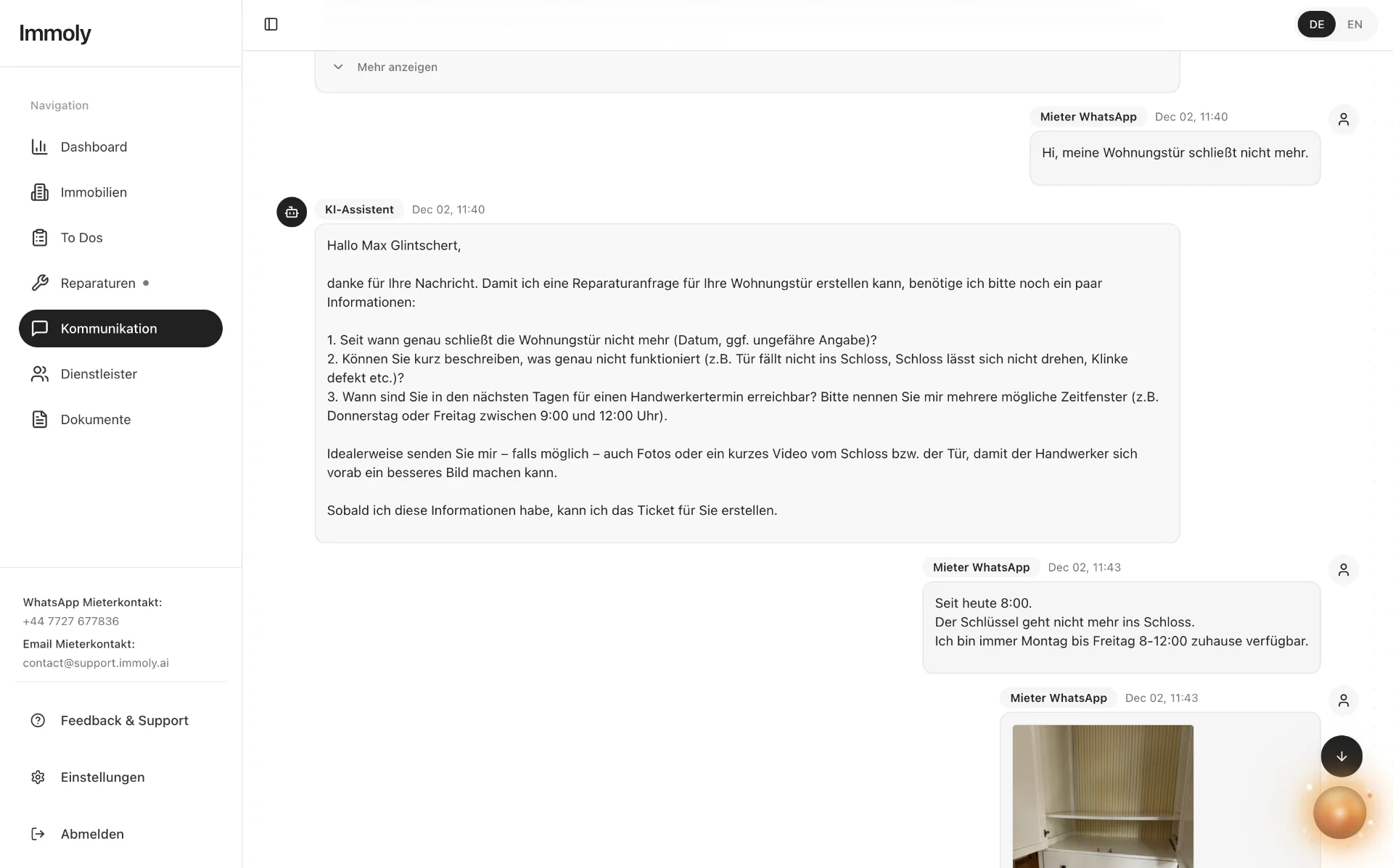
Tenant communication view
Communication, the agent drafts and threads tenant correspondence; the landlord reviews and sends.

Agent-driven workflows: repairs as the proving ground

Repairs are the messiest recurring workflow in property management: a tenant reports a problem, someone triages it, contacts a contractor, coordinates access, tracks the outcome. It's the perfect test of the delegation paradigm, multi-step, multi-party, and consequential enough that people care about control.
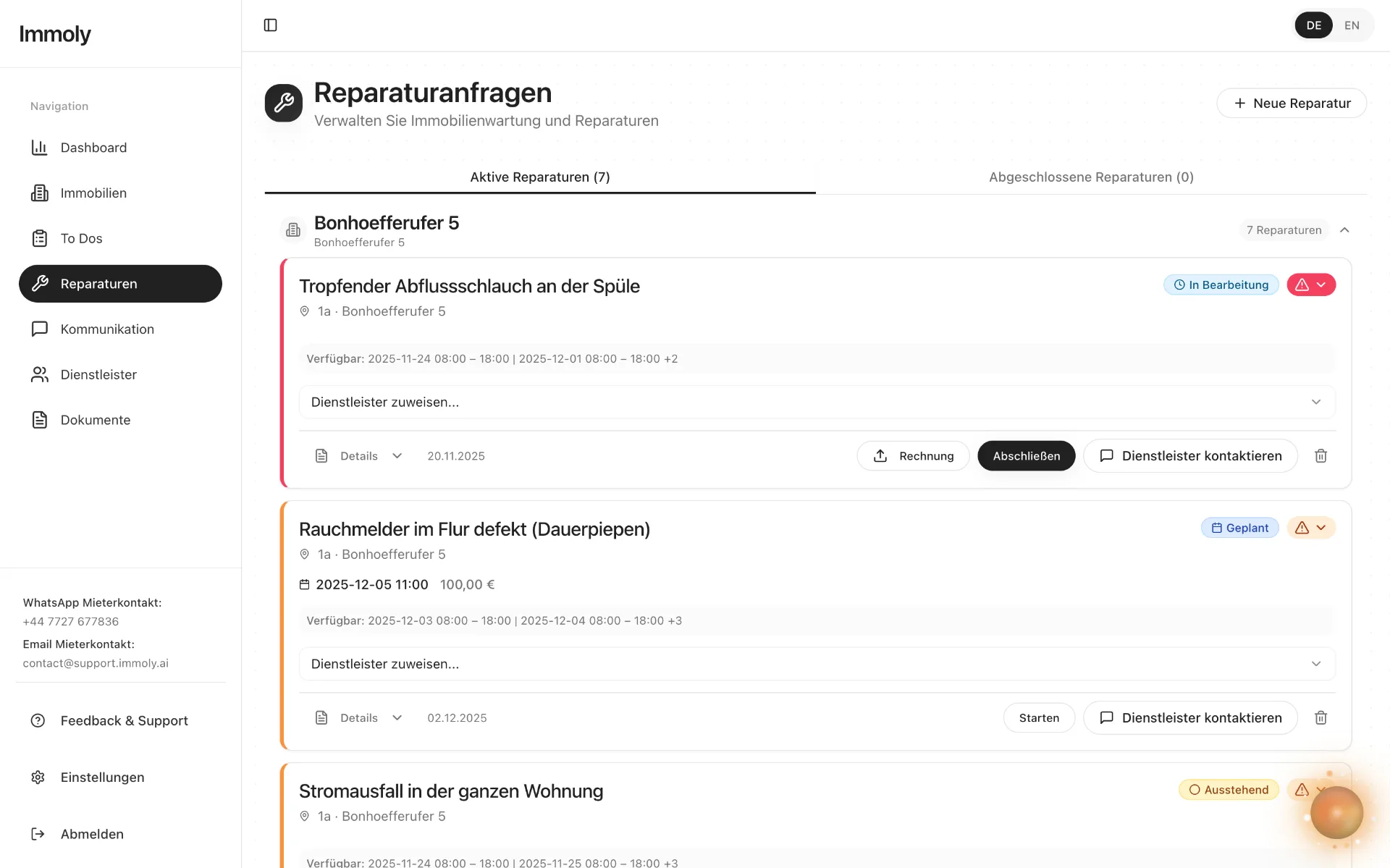
Repairs workflow
Repairs, the agent triages the report, proposes next steps, and coordinates; approval gates sit exactly where money and access are involved.

What I learned

  • Agentic UX is mostly about status design: users forgive an agent for being slow, not for being opaque
  • Approval gates are a product decision, not a UI decision, defining where the human decides was the highest-leverage design work
  • Chat is an entry point, not an architecture: the durable value lives in the structured workspace the agent maintains

Want to see more?

Open to Lead, Principal & senior IC roles, Amsterdam or remote across the EU.