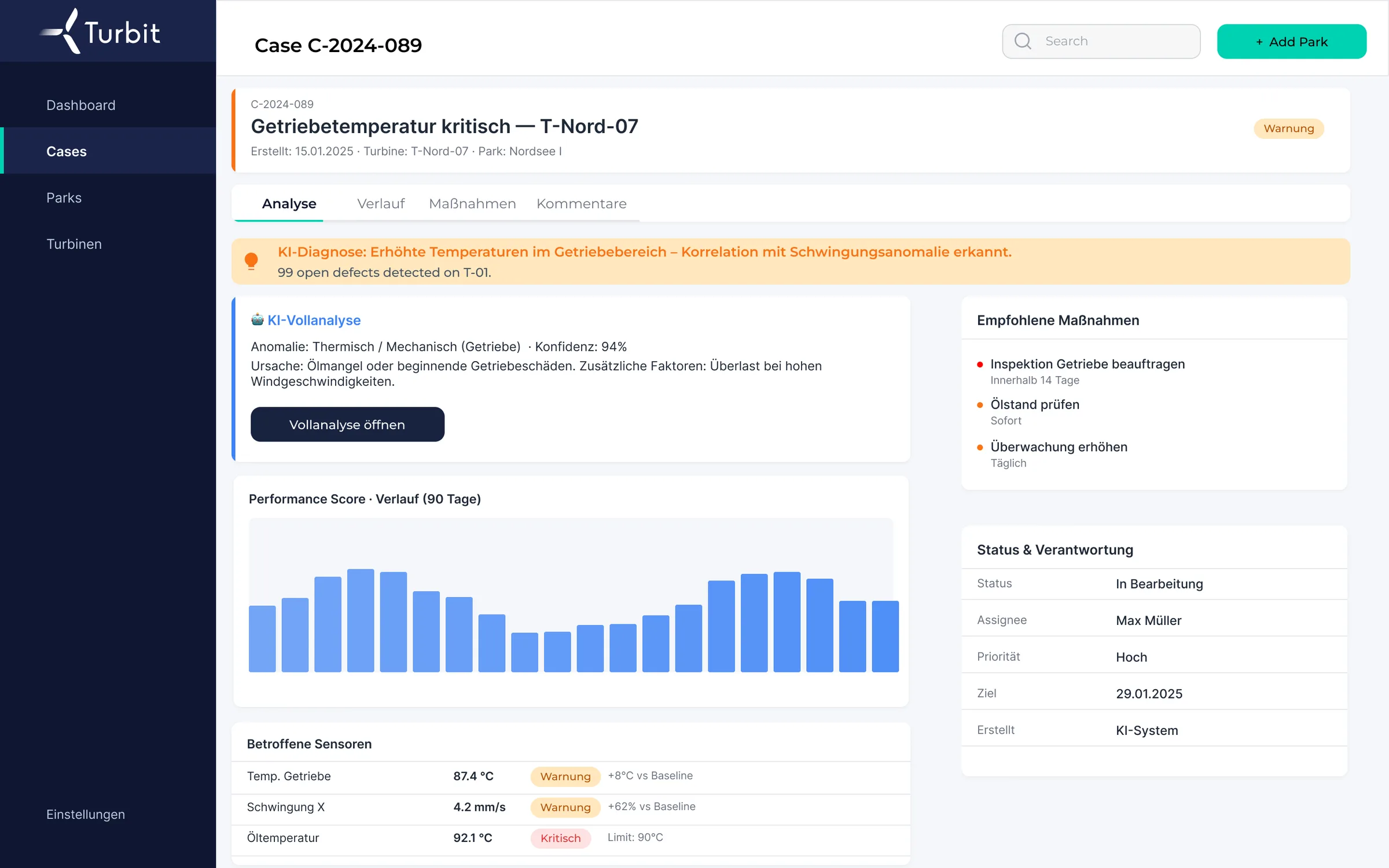
Turbit's AI watches thousands of wind turbines and detects anomalies before they become failures. My job: turn that analysis into an interface operators can actually act on, and rebuild the design foundation of the product along the way. Solo senior designer, end-to-end, from audit to concept to a design system built in one month.
Wind farms produce enormous sensor streams. Turbit's machine learning compares every turbine against a learned normal state and flags deviations early, days or weeks before conventional threshold alarms would fire. That's the product's superpower.
But the interface presenting those findings had grown engineering-first: dense tables, raw plots, and terminology that made every case feel like homework. Monitoring teams handle dozens of open cases at once. When each case takes effort to even read, triage slows down, and the value of early detection quietly evaporates. The design problem wasn't the AI, it was the distance between AI output and human decision.
The case card is the atomic unit of the whole workflow. Operators scan dozens of them daily to decide: investigate, escalate, or dismiss. The original card front-loaded raw analysis, power curves, sensor plots, model output, and left the reader to work out what mattered.
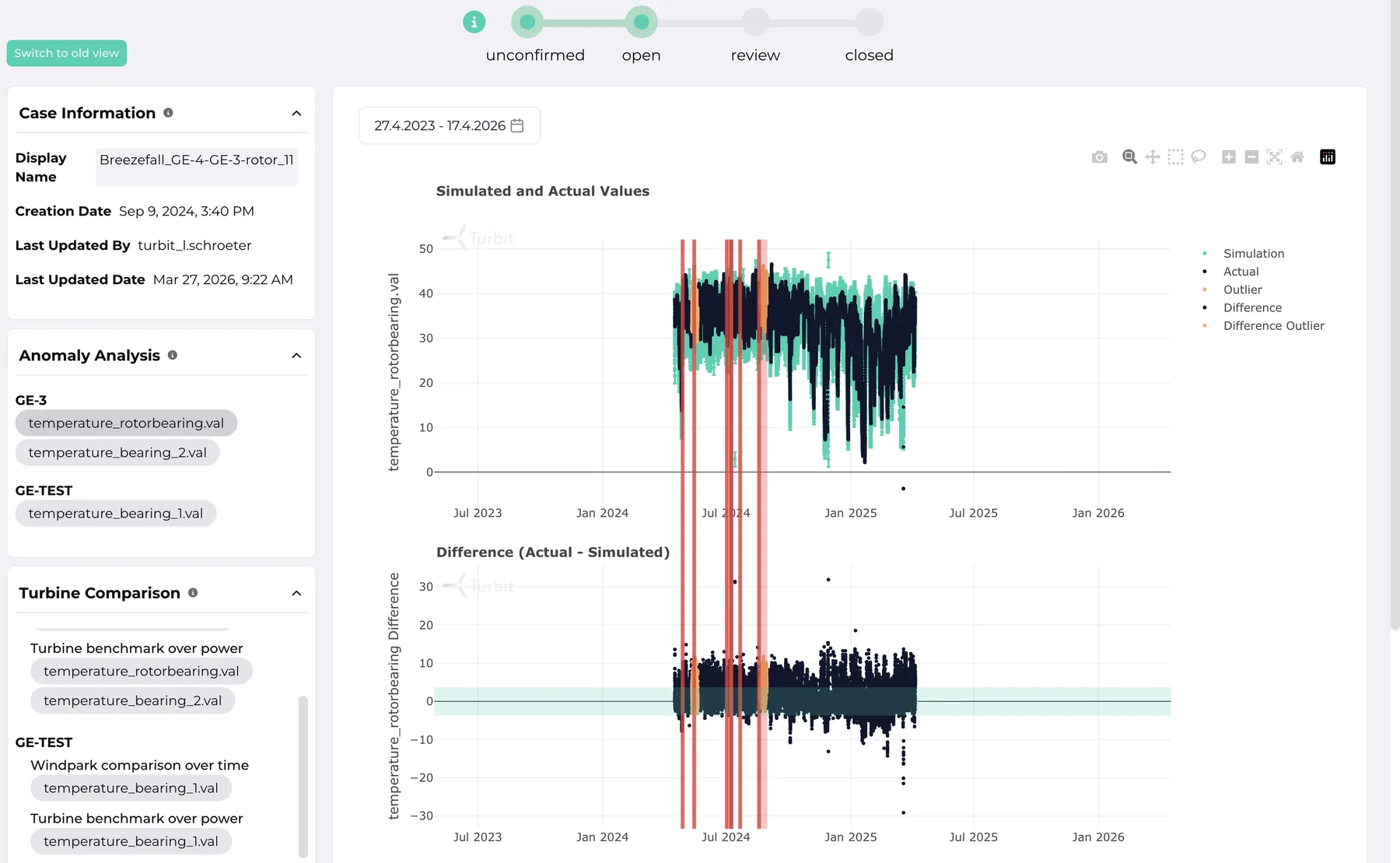
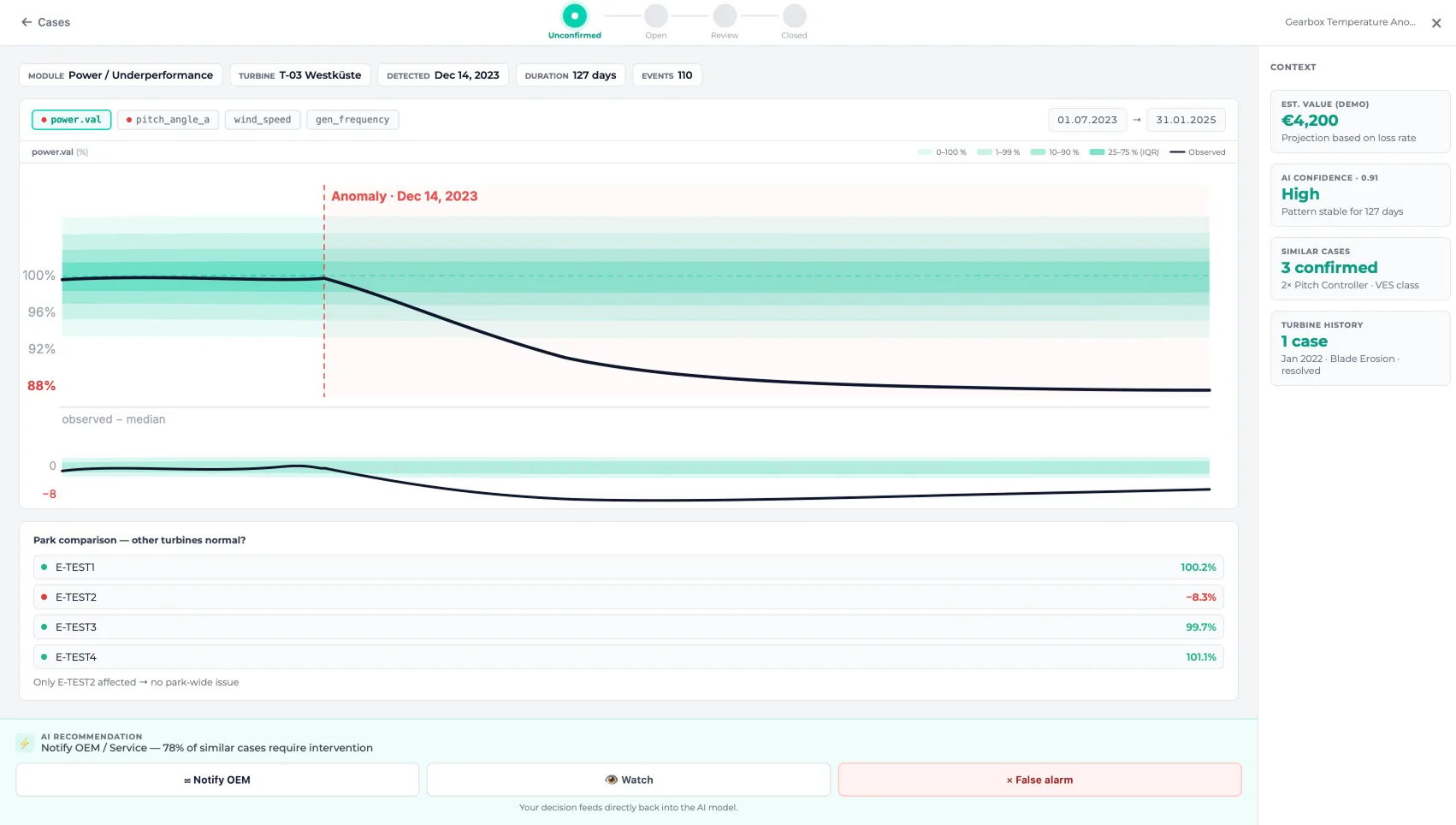
The principle: headline first, evidence second. The AI's finding is summarised in operational language, with severity and confidence visible at card level. Progressive disclosure keeps the full technical depth available without making it the entry price.
Monitoring works at three altitudes: the whole fleet, a single park, a single case. The concept gives each level one clear job and a consistent visual language, status is always readable at a glance, and every level answers "where do I need to look next?"
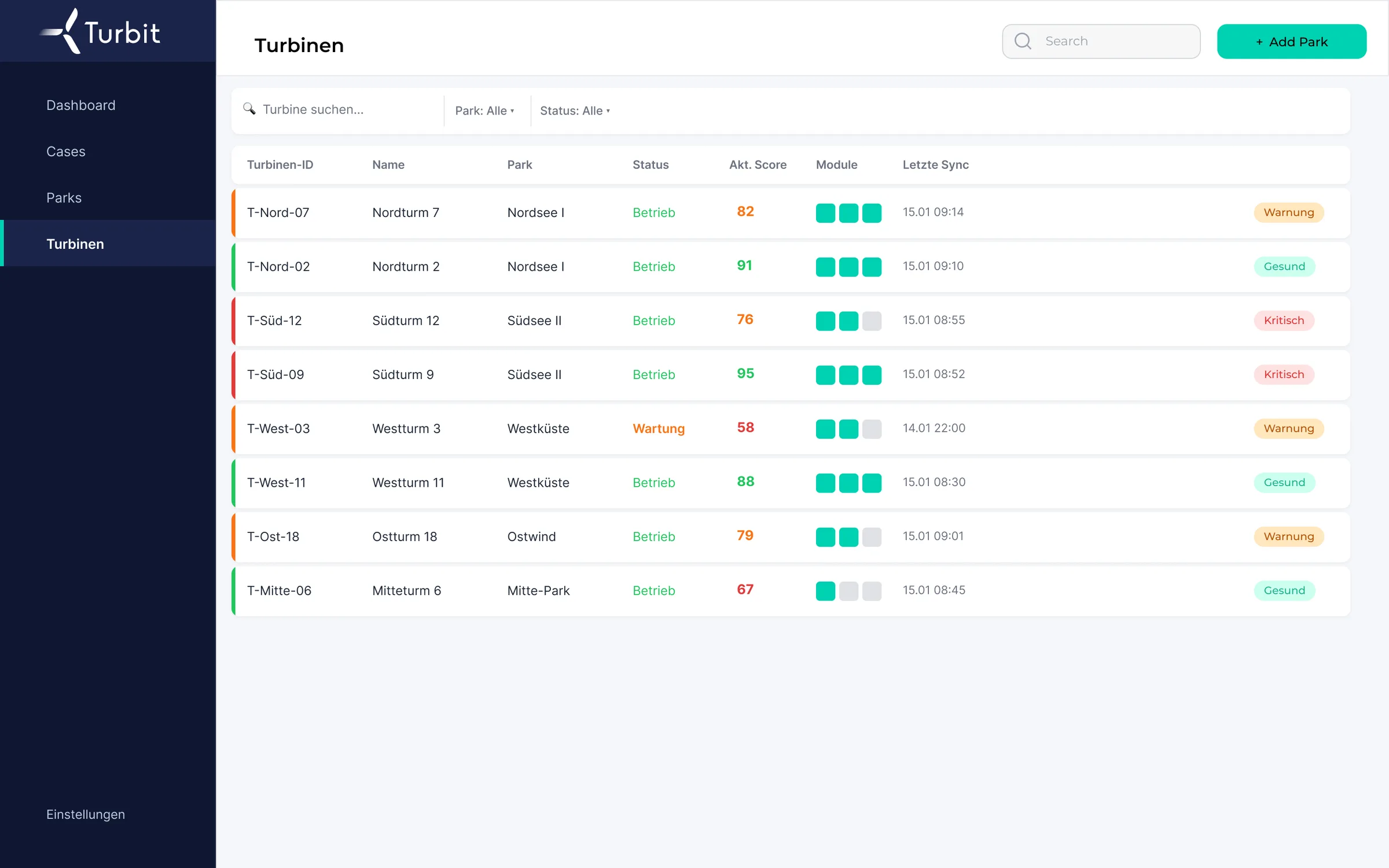
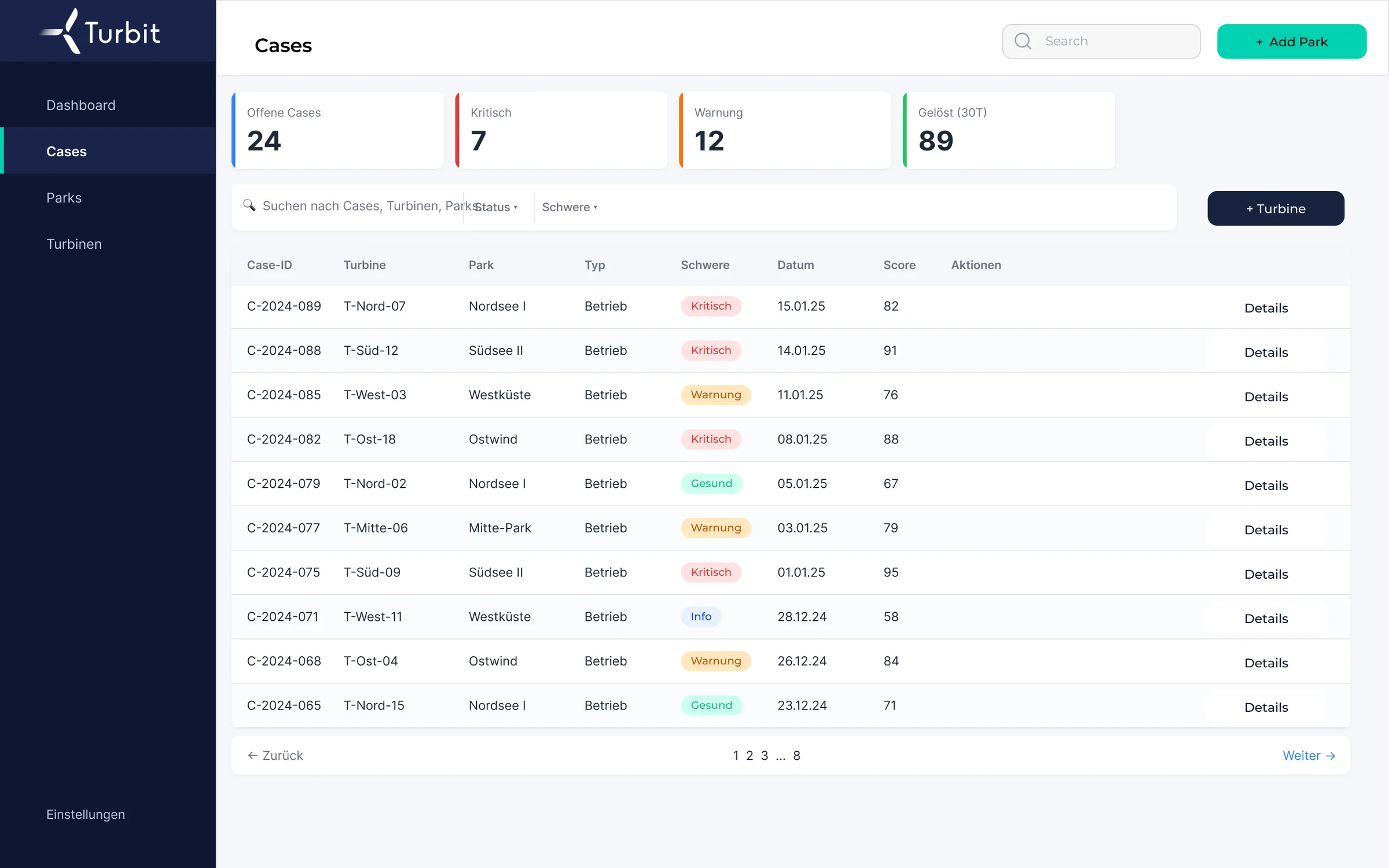
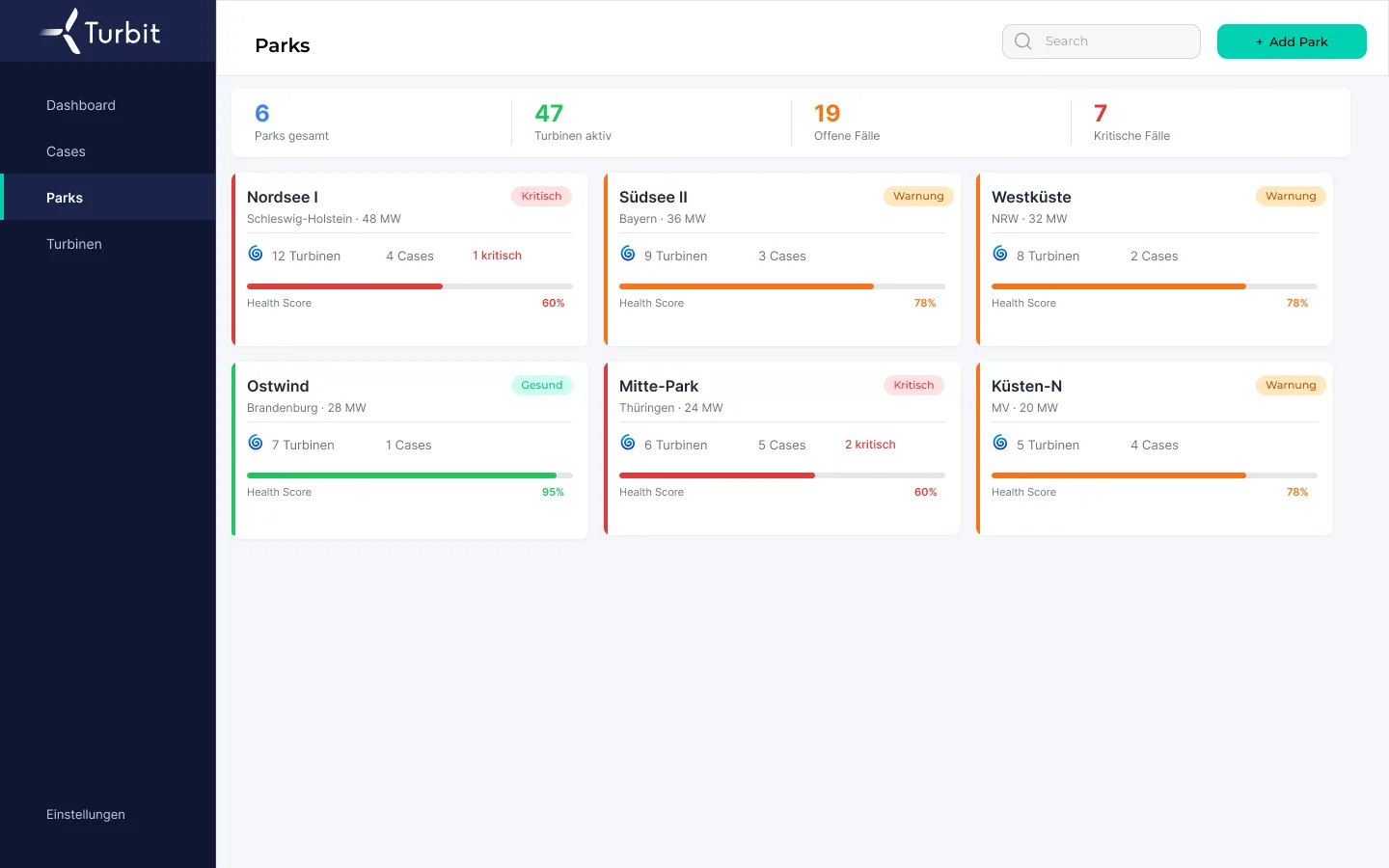
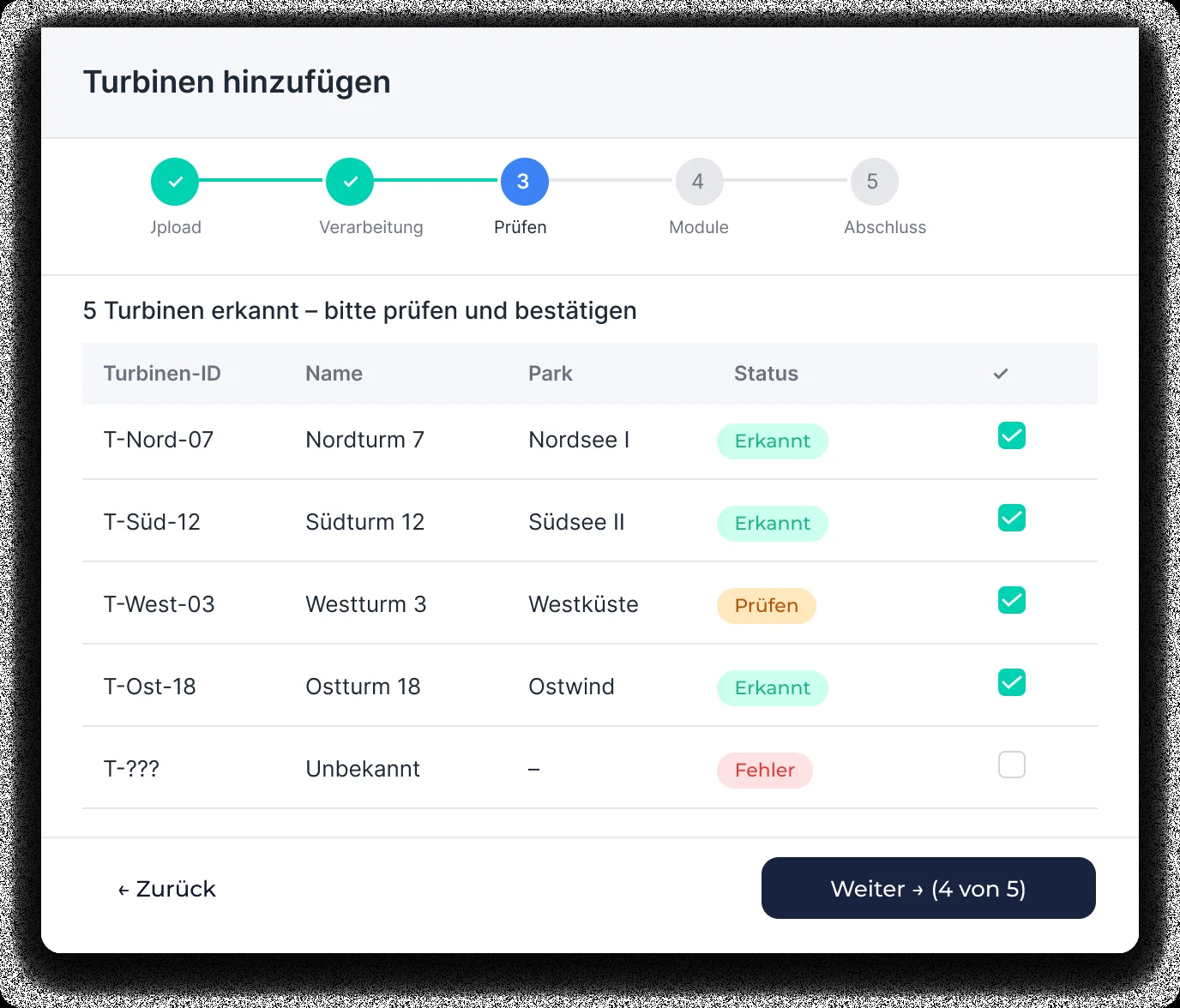
A monitoring product lives or dies by its workflows around the model: how findings enter the system, how they're enriched, and how humans stay in the loop. Part of my work was mapping and designing these flows, including automation like extracting structured case data from unstructured inputs, so operators start from a pre-filled case instead of a blank form.
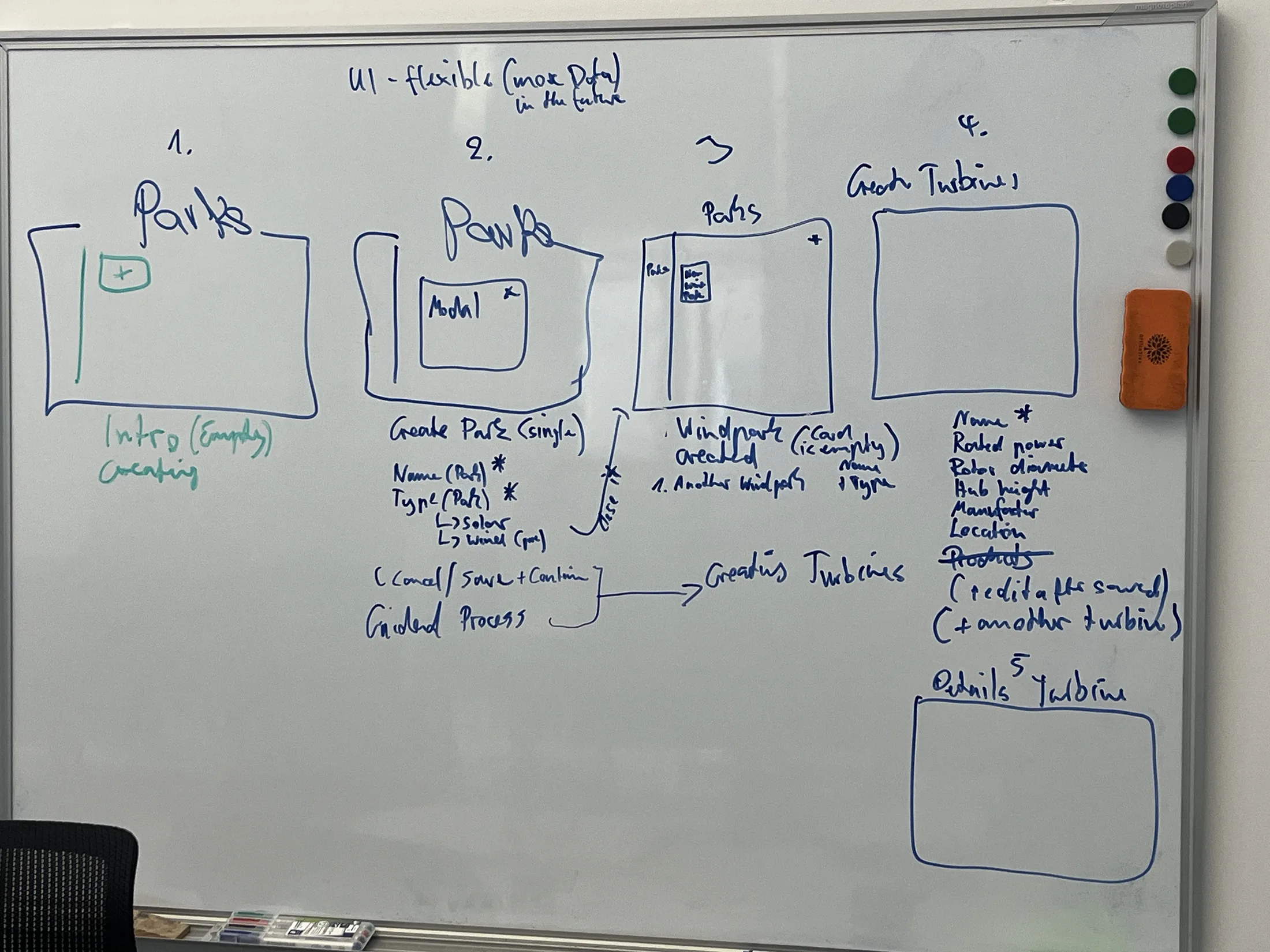
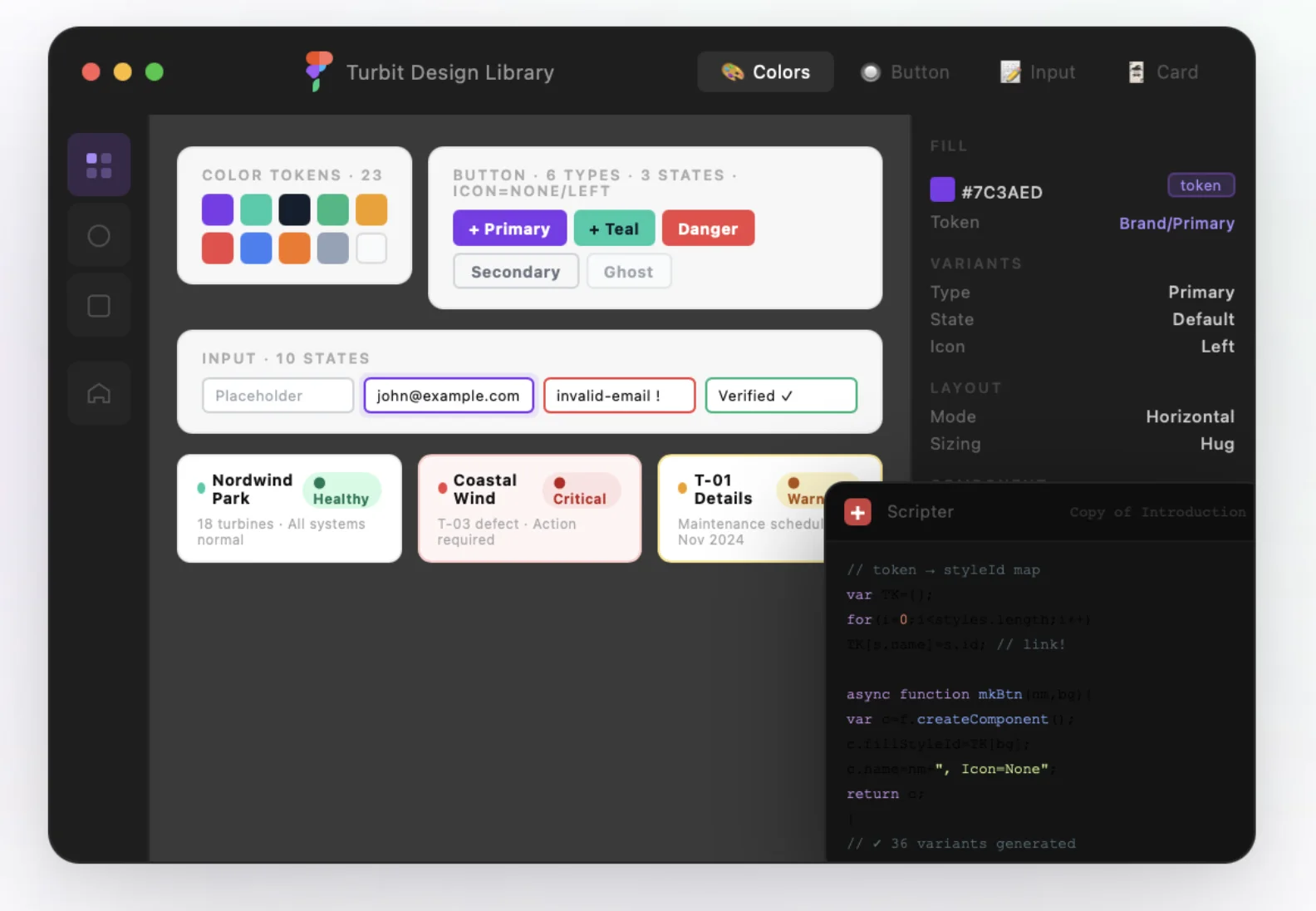
The relaunch needed a foundation, and there was no time for a six-month system project. My approach: extract the system from the product instead of inventing it beside the product. I audited the existing interface, identified the real recurring patterns, and consolidated them into tokens and components, then designed the new concepts exclusively from that system, which stress-tested it immediately.
The shipped product is under NDA, I'm happy to walk through it in a call. Open to Lead, Principal & senior IC roles, Amsterdam or remote EU.